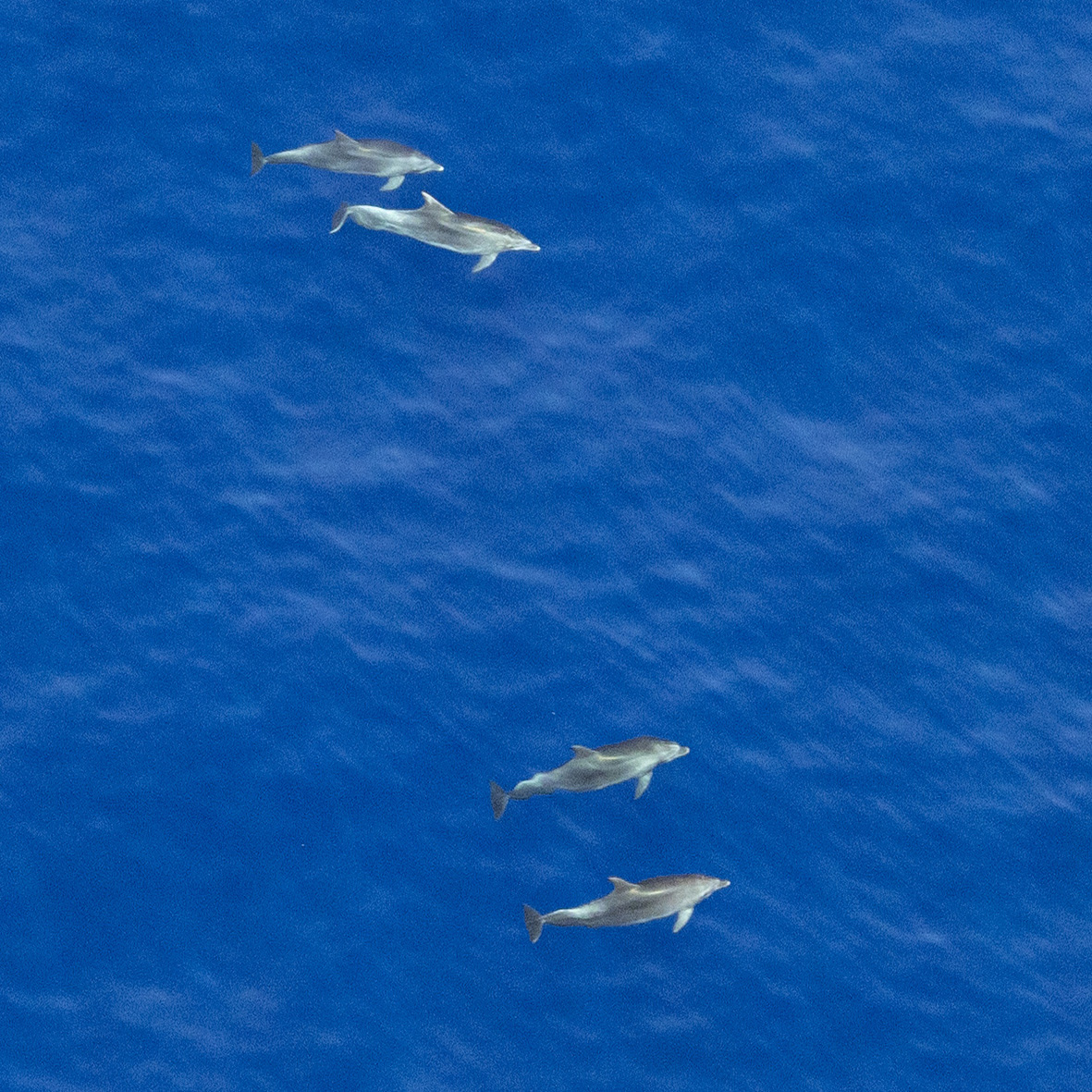
8. International aerial survey of whales, dolphins and sea turtles underway in the Adriatic Sea
An international aerial survey of whales, dolphins (Cetacea) and sea...

11.08.2026
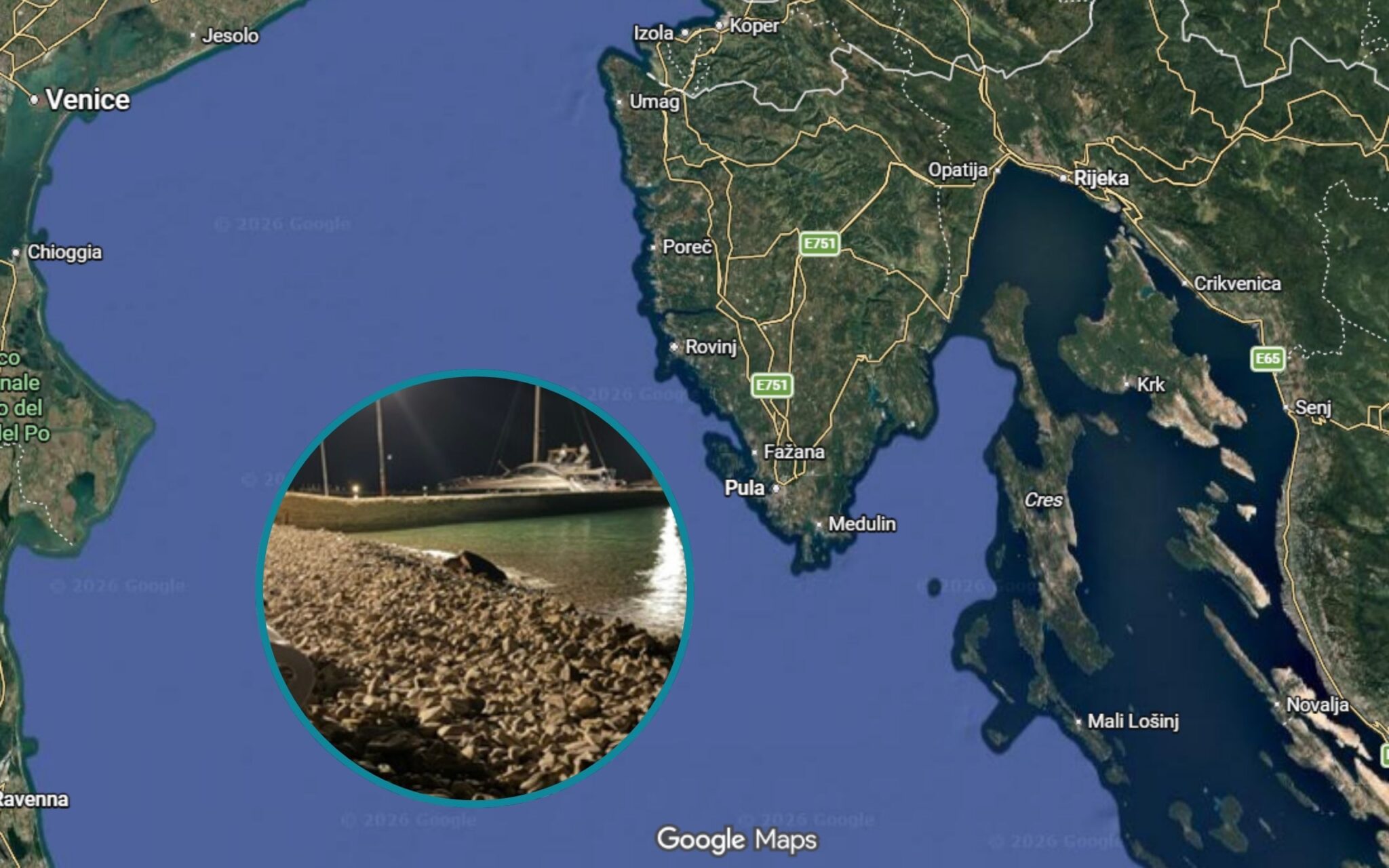
In mid-July, in Istria a sea turtle was observed emerging onto the shore at night. However, the turtle returned to the sea without nesting – a behaviour known as a non-nesting emergence or a “false crawl”. Although this occurred in the peak of the sea turtle nesting season in the Mediterranean, this is an unusual event for the area.
The most common sea turtle species in the Mediterranean Sea, the loggerhead sea turtle (Caretta caretta), typically breeds in a few sites with high clutch densities. These “major” nesting sites are localized in Greece, Turkey, Cyprus, and Libya. However, “minor” nesting sites and individual clutches can be found almost all over the basin. Over the past 15 years, around 20 loggerhead nests have been recorded along the Adriatic coast. In 2025, the first – and so far only – confirmed loggerhead nests in Croatia were recorded on the island of Korčula (read more in our article: https://www.blue-world.org/the-first-loggerhead-turtle-caretta-caretta-nest-discovered-in-croatia/).
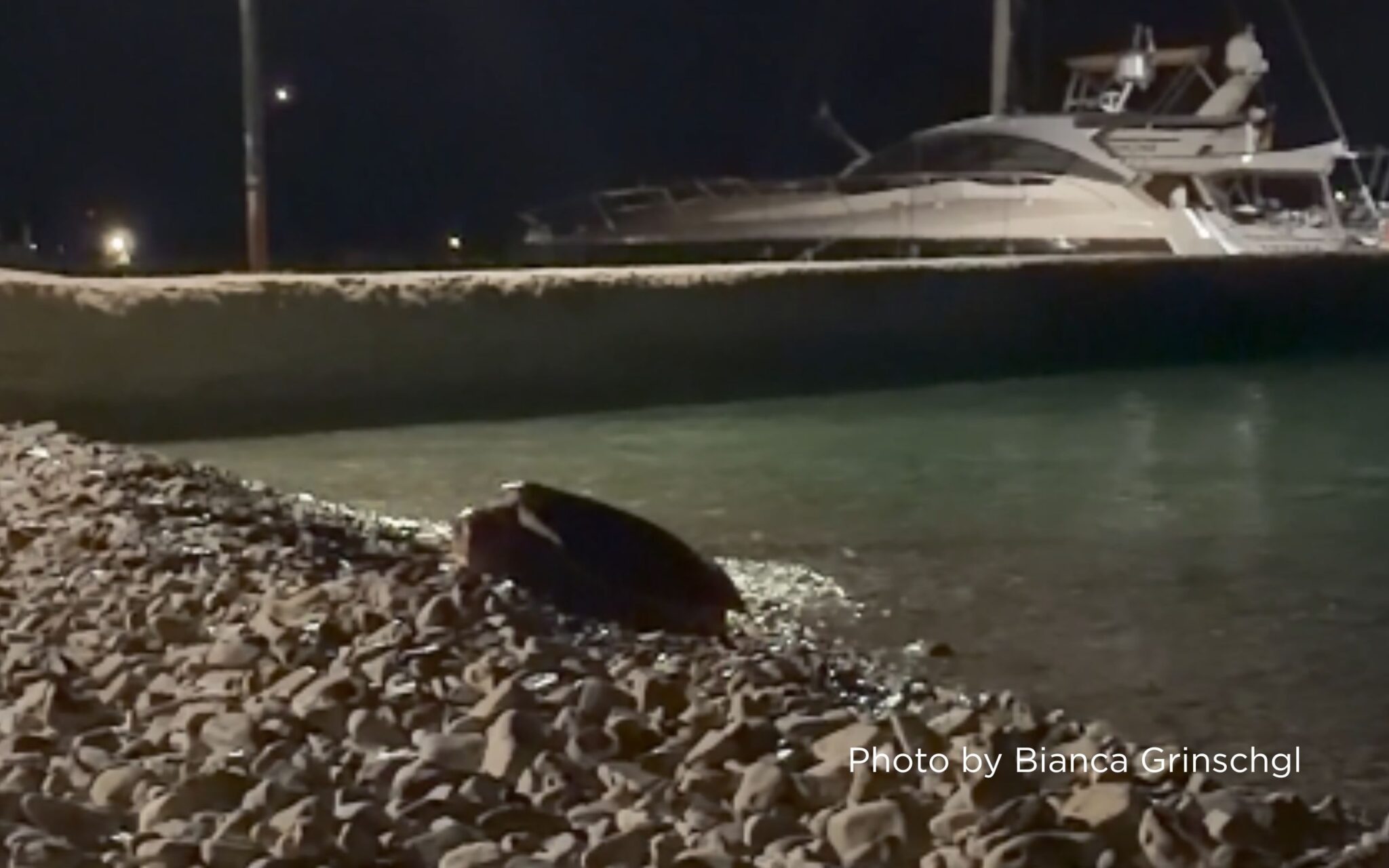
Sea turtle emergence onto the shore
False crawl events vary in frequency among different sea turtle species and are not uncommon in loggerhead sea turtles. There are many possible reasons why a female may emerge onto a beach but ultimately return to the sea without laying eggs. Some of these reasons are natural. For a beach to provide suitable nesting conditions, it needs to meet a number of requirements, including suitable sediment granulometry, sufficient substrate depth, an appropriate beach slope, adequate sand moisture, protection from waves, etc. In addition, sea turtles may emerge onto the shore and return to the sea before completing nesting as a result of human disturbance, such as artificial lighting, the presence of people, noise, or physical obstacles on the beach, including beach furniture, tents, umbrellas and large beach debris.
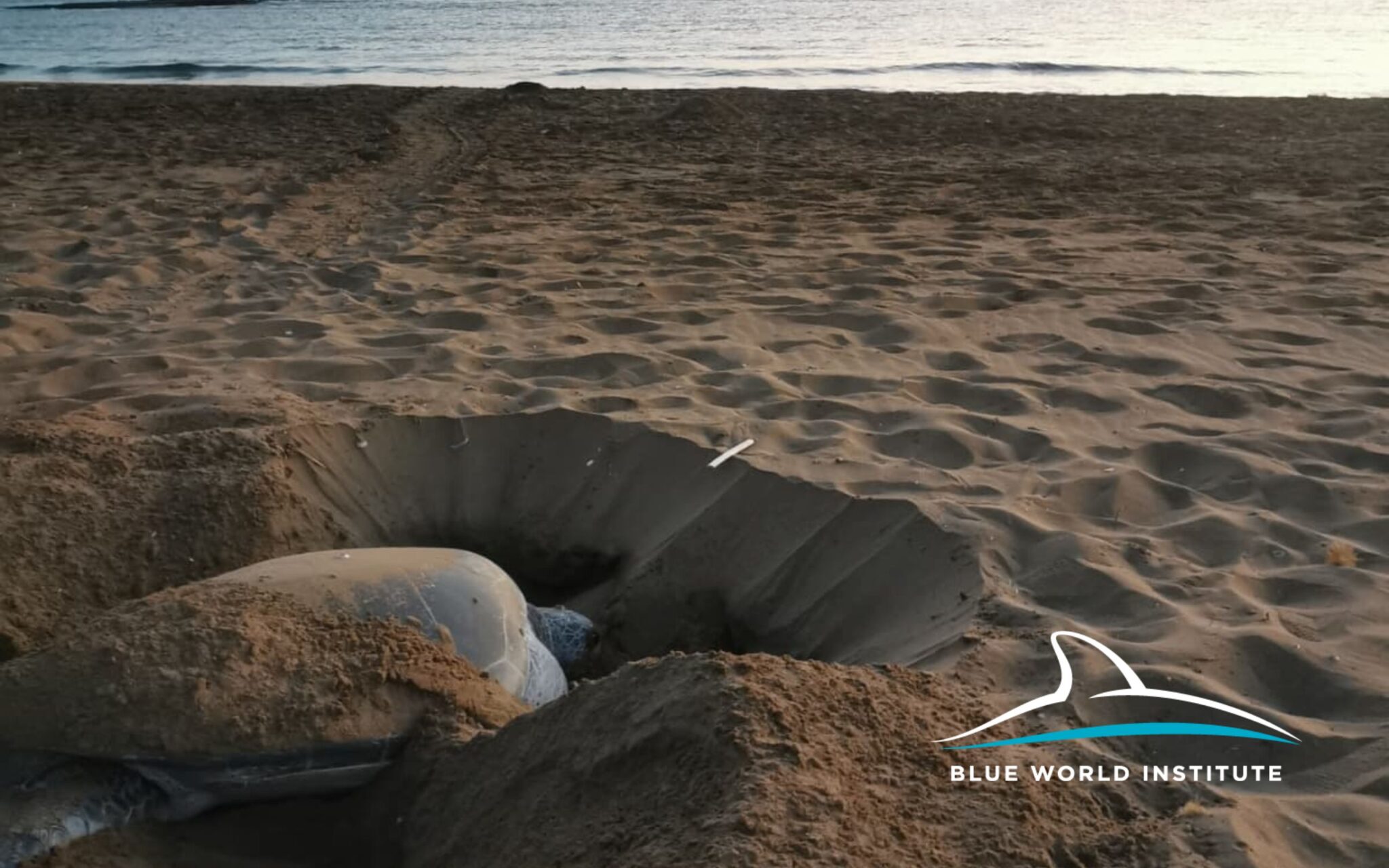
Green turtle nesting in Cyprus
So-called “false crawls” vary also depending on how much effort a female has invested in the nesting process. A turtle may return to the sea immediately after emerging onto the beach without attempting to nest, as in this case, or she may begin the nesting process and even partially excavate the egg chamber before returning to the sea. A female may abandon nesting if she encounters thick roots, debris, loose dry sand that collapses, or another obstacle that prevents her from completing the excavation. Sometimes, a female sea turtle may return to the sea without any obvious reason for abandoning her nesting attempt.
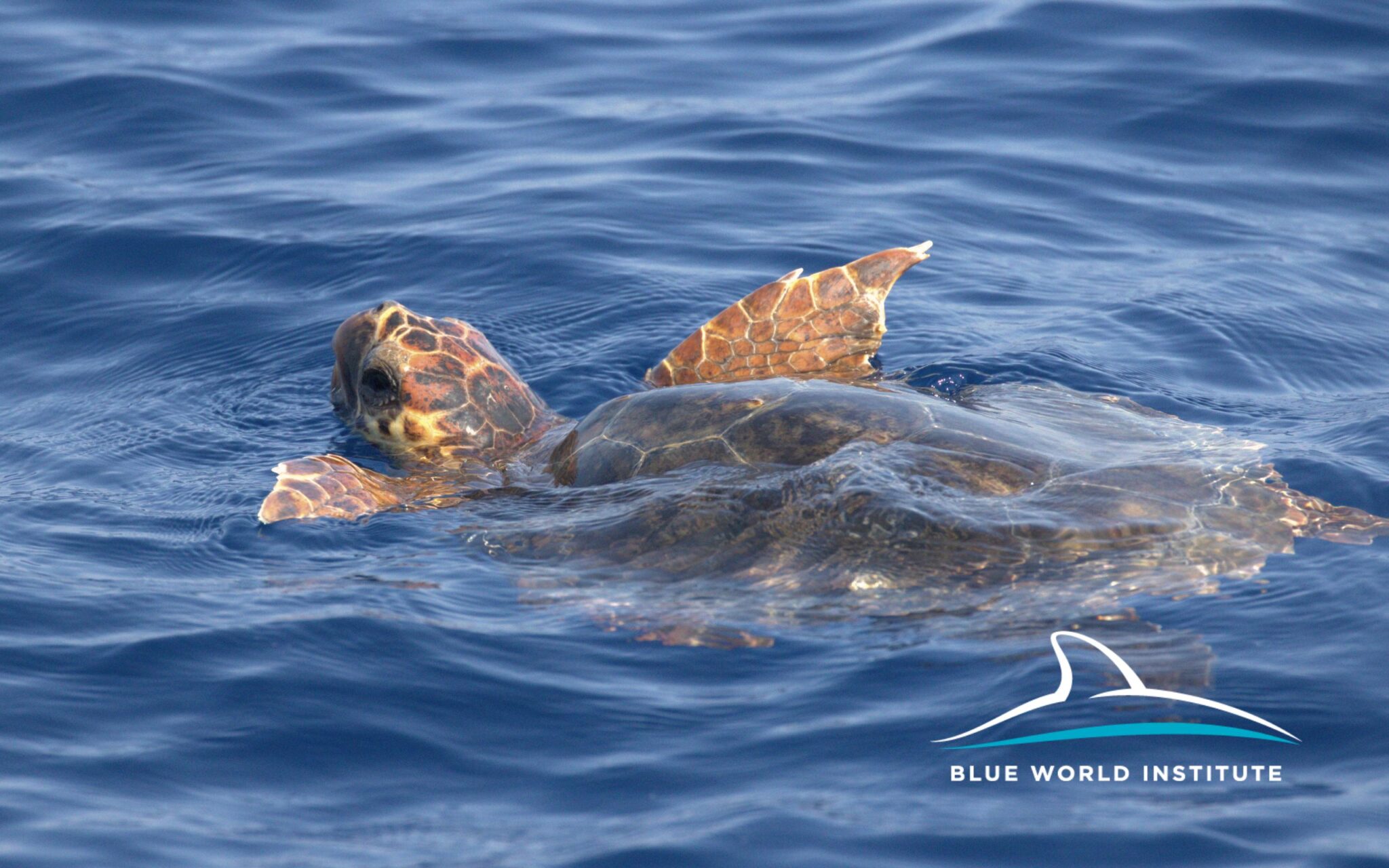
Archive photo from the Blue World Instutute
If you encounter a sea turtle on the beach, it is important not to disturb her and stay out of her way. Any distractions may frighten the turtle and cause her to false crawl. You can take photographs or record a video from a distance, without using the lights, and report the sighting at info@plavi-svijet.org or via our Facebook profile – Blue World Institute. Every report of a live, injured or dead sea turtle is valuable, as it provides important information for monitoring their presence and activities in the Adriatic Sea.
An international aerial survey of whales, dolphins (Cetacea) and sea...
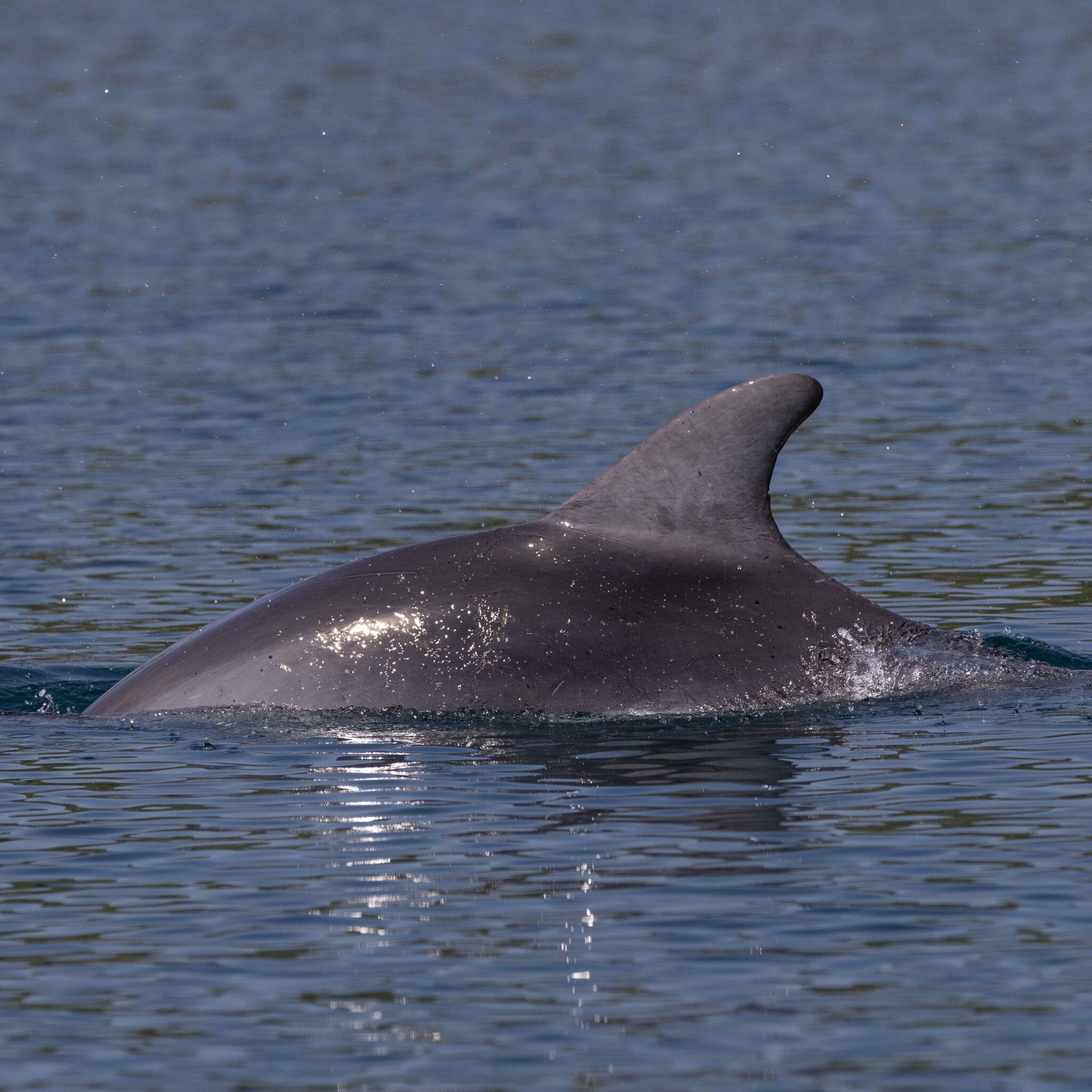
Keep your distance, for his safety and yours Following a...

On Wednesday, July 1st, we marked our traditional Dolphin Day....
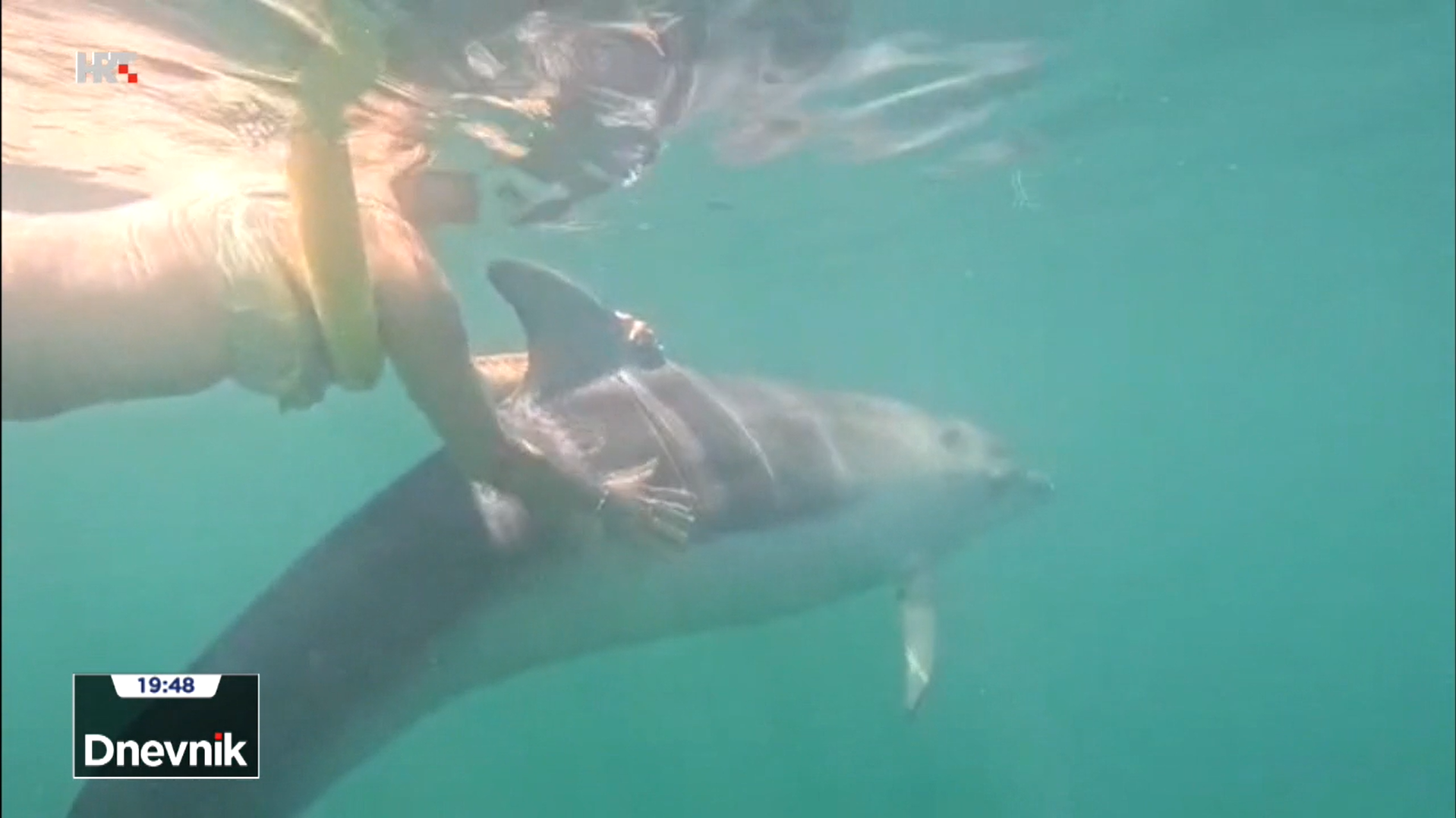
Over the past few weeks, we have reviewed numerous photographs...
