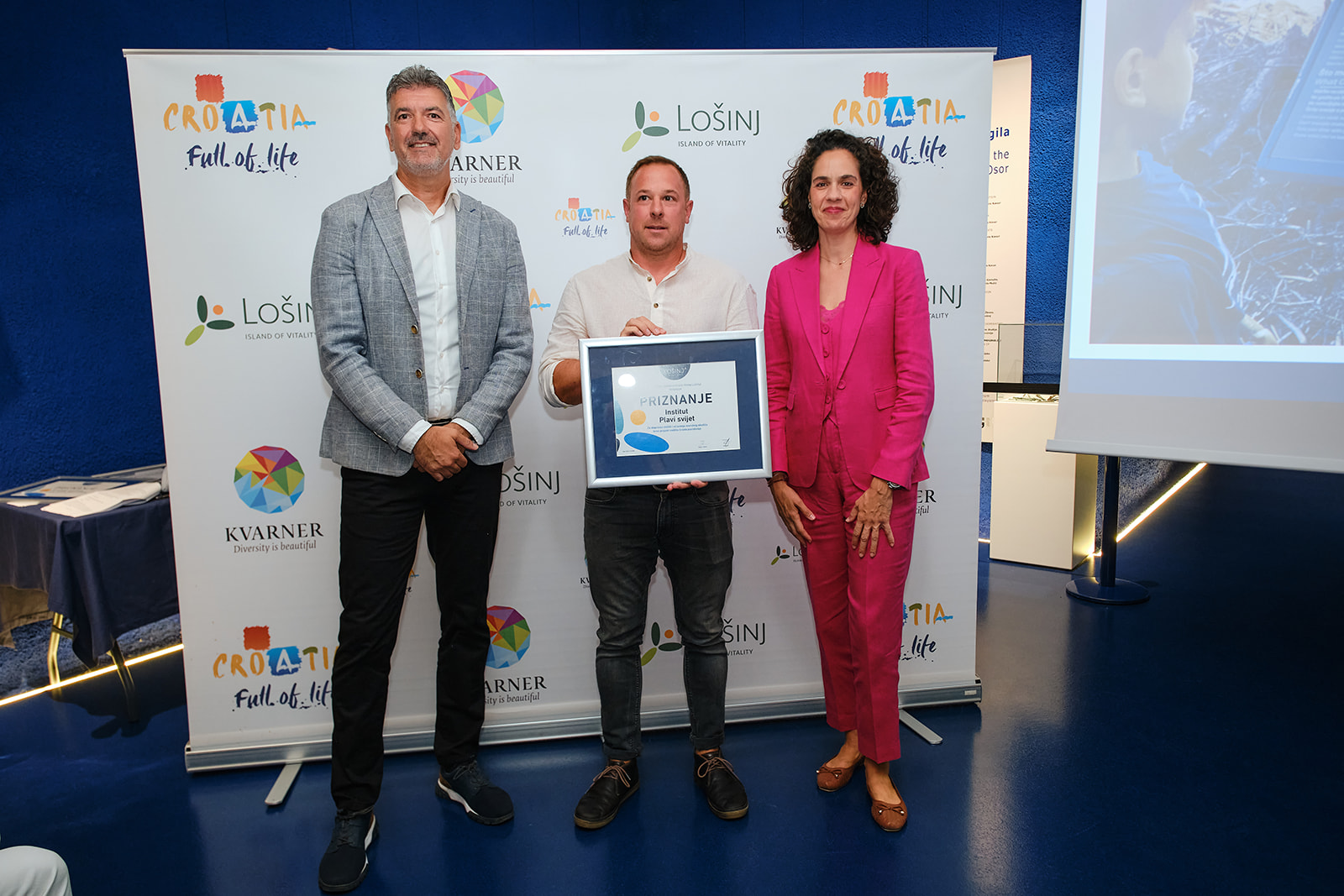
The Blue World Institute has received the “Business Excellence 2026” award in the NGO category
We are proud that the Blue World Institute has received...

22.09.2026
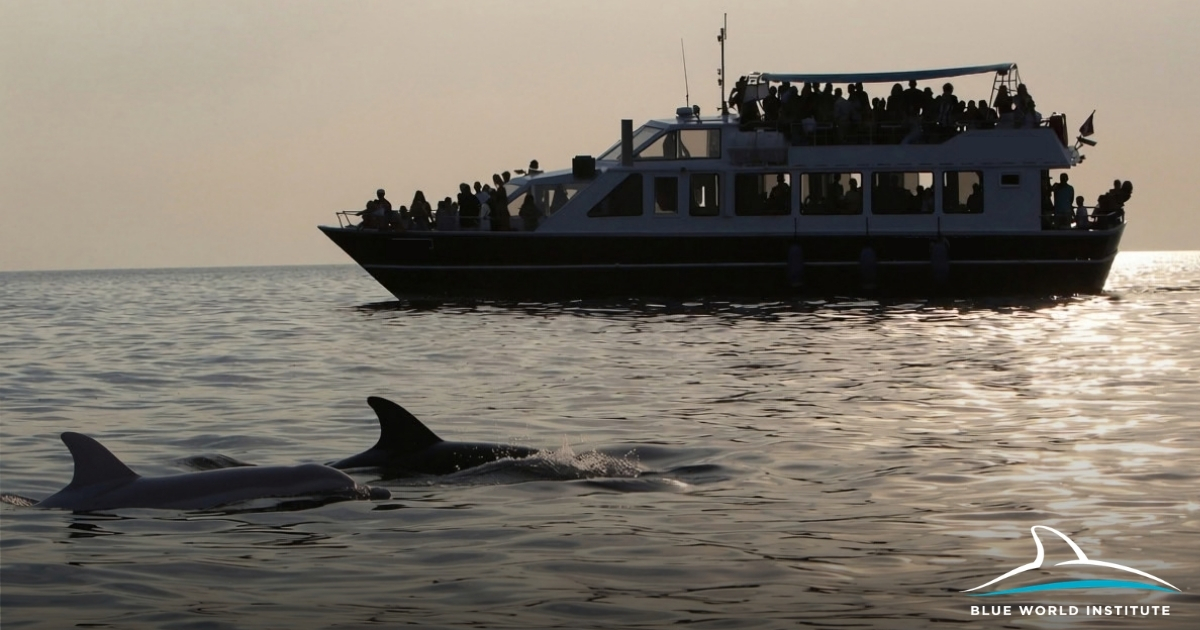
Dolphin observations have become an increasingly popular part of the coastal tourism experience, offering visitors the opportunity to encounter these wild animals in their natural environment. But as the number of tour operators on the sea increases, so does the need to ask an important question: how can we enjoy watching dolphins without disturbing them?
The need to write a text about this topic was prompted by a report from a concerned tourist about an incident that recently occurred at sea near Rovinj. According to the report, approximately 15 to 20 vessels had gathered around a small group of dolphins, with some boats approaching the animals at a very close range. Several vessels were circling the dolphins and making sharp, rapid turns, while one dolphin was repeatedly slapping its tail against the water’s surface. The disturbance was estimated to have continued for around an hour. The incident was documented with photographs and video footage, and the report was forwarded to the relevant authorities.

Photo from the Blue World Institute archive
Unfortunately, this is not an isolated situation. During the tourist season, it is increasingly common for several tour boats, private vessels and rental boats to gather around the same group of dolphins, approaching them too closely, circling them, changing direction suddenly and following them for extended periods of time. What may appear to people on board as an exciting wildlife encounter can become a prolonged and stressful disturbance for the animals.
Such situations demonstrate why dolphin watching must be governed by clear rules with effective enforcement. Good practice should allow visitors to enjoy seeing dolphins while leaving the animals free to continue their natural activities. When multiple vessels approach, surround or pursue dolphins simultaneously, the animals are forced to interrupt their natural activities, including feeding, resting, travelling, caring for calves and socializing.
Of particular concern is that these situations often occur during the busiest period of the year for maritime traffic, when dolphins are raising their young. Underwater noise, sudden approaches and the constant presence of vessels are not merely temporary disturbances. Prolonged disturbance can lead to stress, behavioral changes, reduced reproductive success and the abandonment of important areas.

Photo from the Blue World Institute archive
Received report is not an isolated case, but rather an example of a broader issue involving insufficient awareness among boaters and tourists, inadequate monitoring and enforcement of responsible behavior at sea, and unclear responsibilities among tour operators and boat rental providers. Dolphins are wild and legally protected animals, not attractions that can be approached whenever and however people wish.
Observing them responsibly means maintaining an appropriate distance, avoiding pursuit and allowing them to determine whether and how an encounter takes place. The best encounter is not necessarily the closest one, but the one that leaves the dolphins undisturbed.
Dolphin watching: yes. Disturbance: no.
We are proud that the Blue World Institute has received...
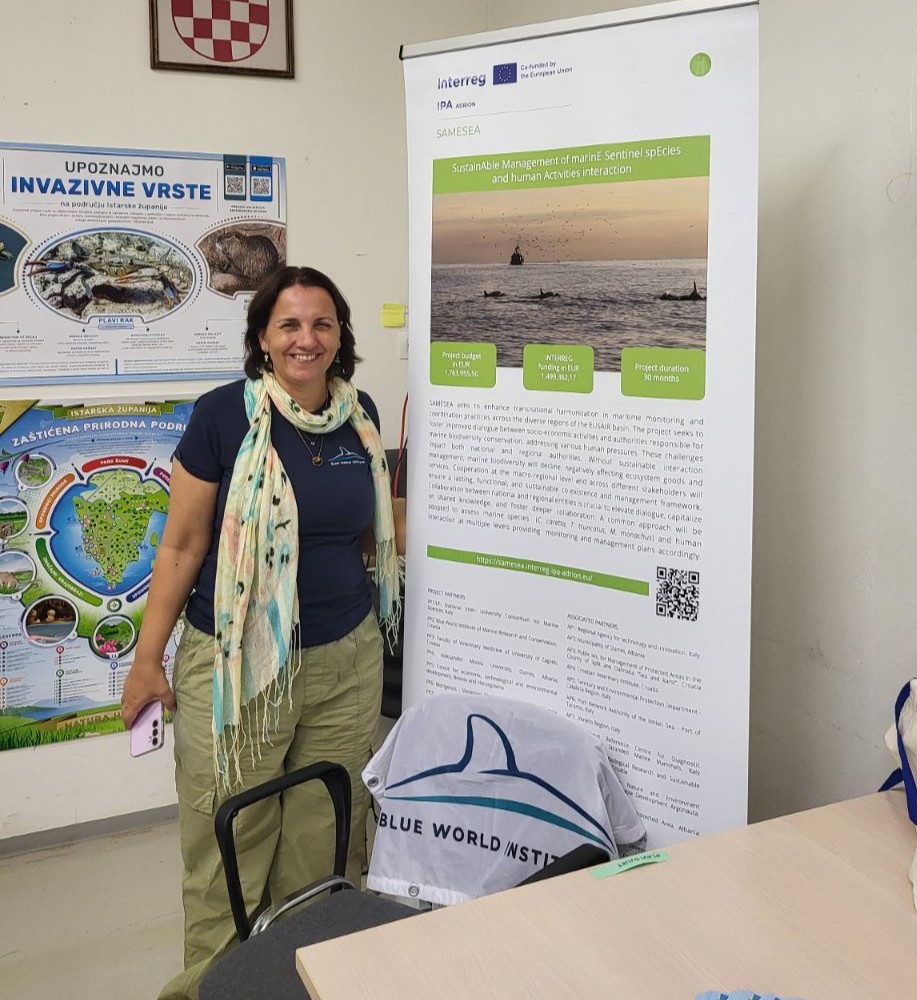
Last week, the members of the Blue World Institute participated...

Yesterday, together with 4th-grade pupils from Mario Martinolić Primary School,...
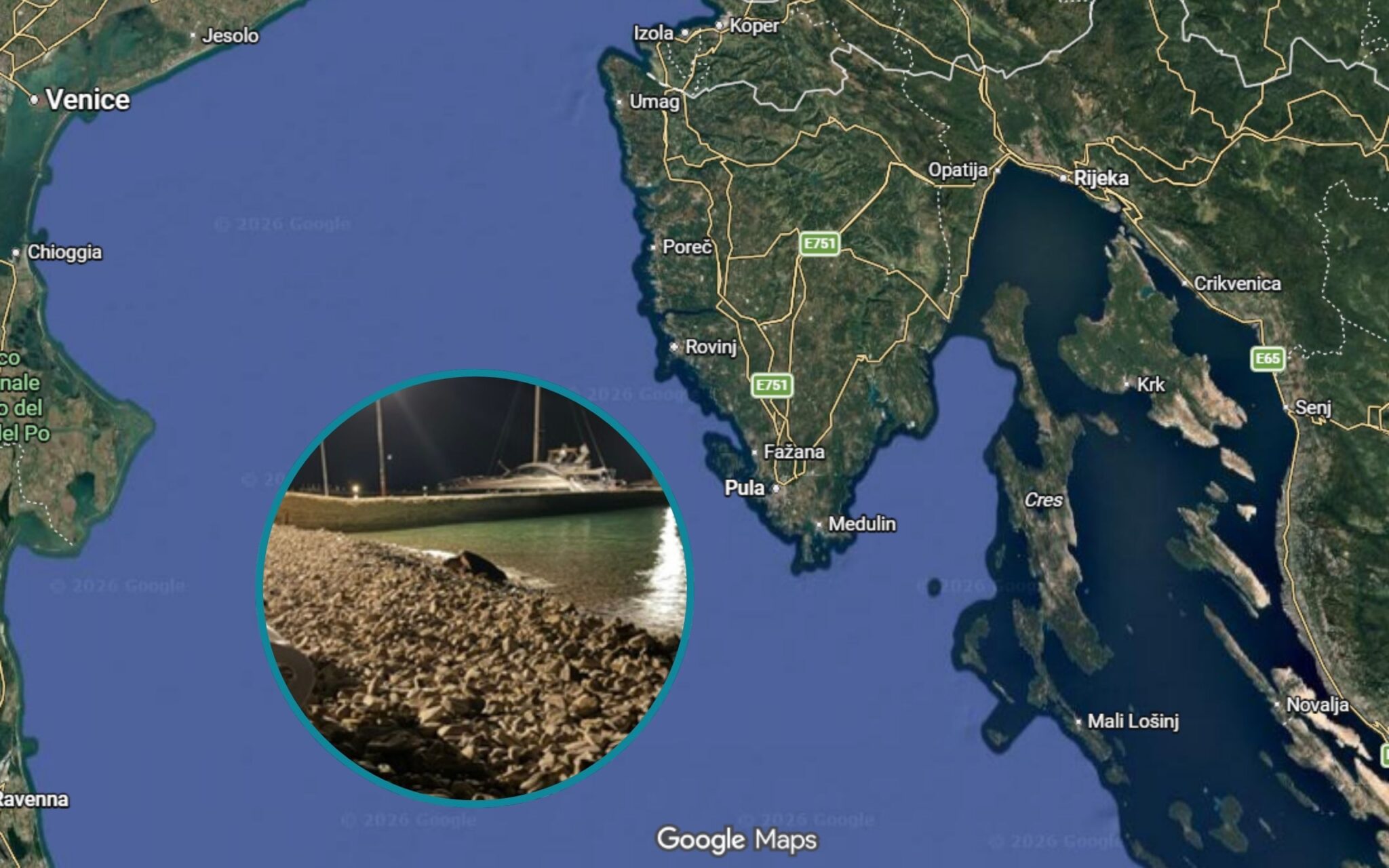
In mid-July, in Istria a sea turtle was observed emerging...
