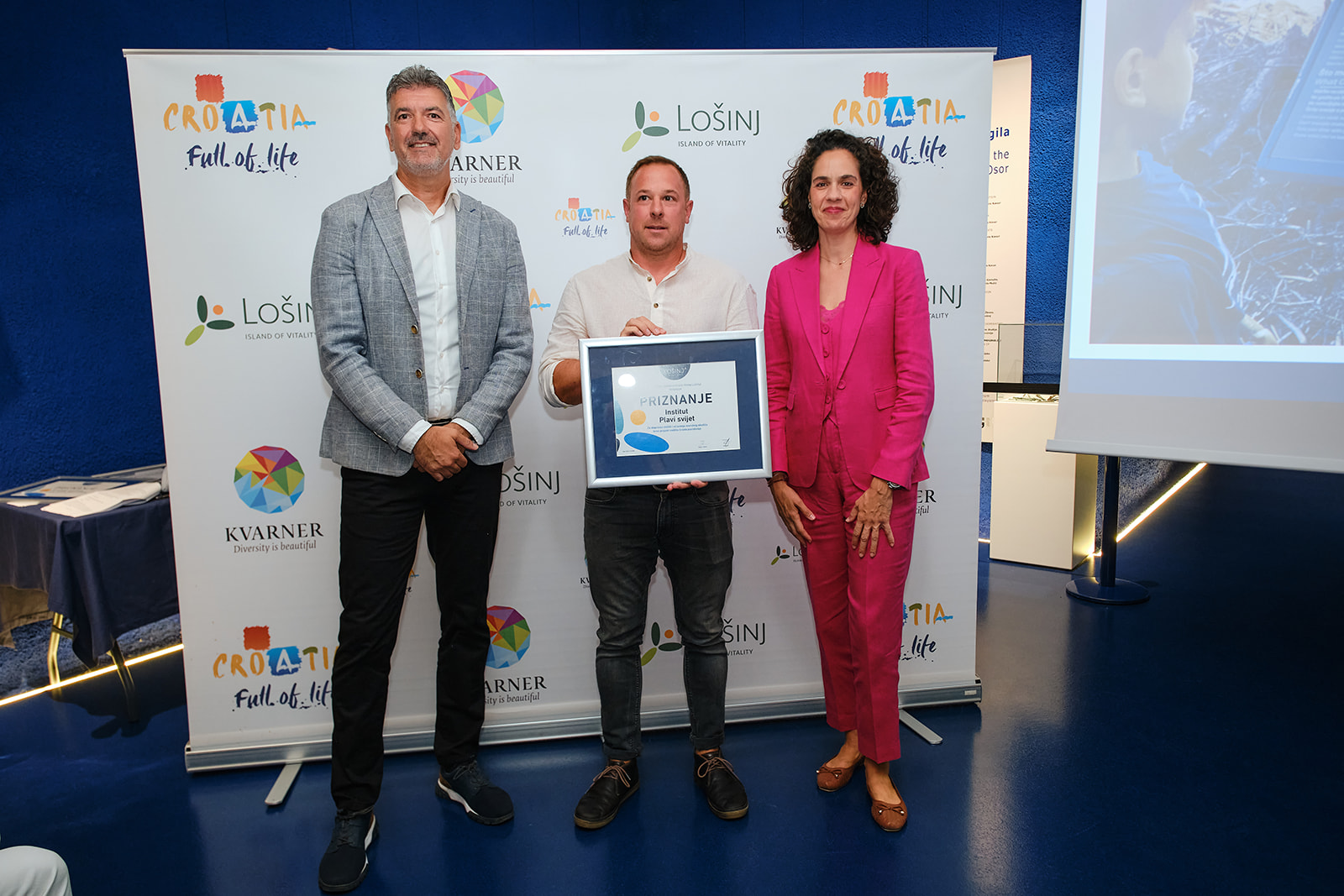
The Blue World Institute has received the “Business Excellence 2026” award in the NGO category
We are proud that the Blue World Institute has received...

23.06.2026
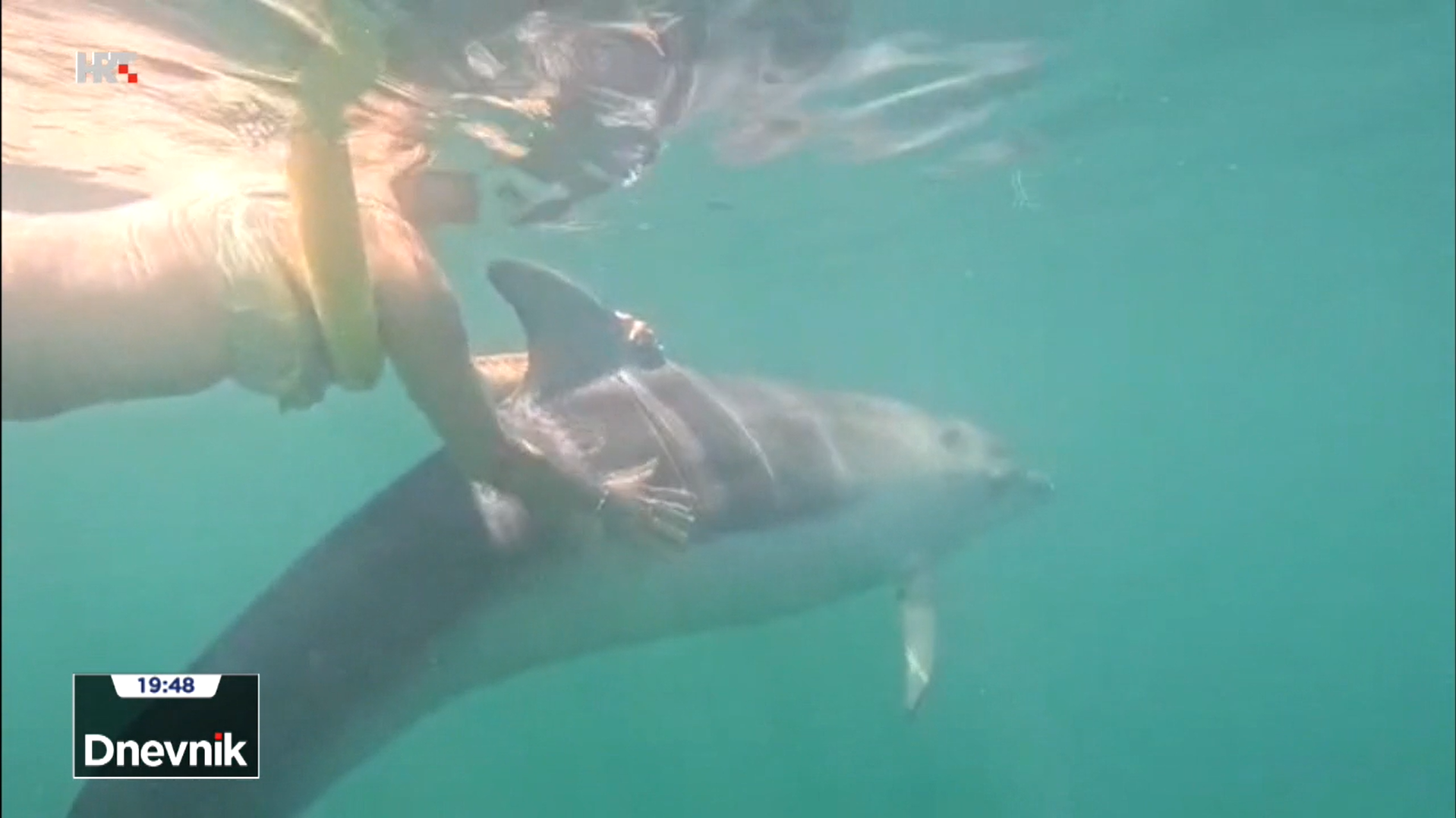
Over the past few weeks, we have reviewed numerous photographs and videos of a bottlenose dolphin observed interacting with boats and swimmers in the Novigrad Sea and the Velebit Channel. We can confirm that the dolphin featured in these recordings is our well-known bottlenose dolphin, Oliver. We first observed Oliver as a calf on 21 May 2021 together with his mother in the Velebit Channel.
Tourists are draging Oliver by his dorsal fin.
Subsequent reports of sightings in autumn 2023 confirmed that a piece of rope had become entangled around his tail stock and was trailing behind him. Despite our efforts to free him from the rope, Oliver would not allow us to approach closely enough, and the rescue attempt conducted in the summer of 2024 was unsuccessful (read more in our article: https://www.blue-world.org/bottlenose-dolphin-in-the-novigrad-sea-entangled-in-rope-around-its-tail/).
We were pleased to discover from recent footage that Oliver has managed to free himself from the rope he had been carrying since last year. Unfortunately, the entanglement has left lasting consequences. The footage clearly shows that parts of both the left and right sides of his tail fluke have been severed, while scars at the base of the tail are still visible. Despite these injuries, Oliver appears to be in good physical condition and continues to swim and dive normally. The fact that he has survived for such a long period since the initial entanglement demonstrates that he has been feeding successfully. Now that he is free of the rope, we expect the injured areas to continue healing.
Bottlenose dolphins are capable of surviving and living with far more severe injuries. One example is the dolphin Košara, who became entangled in fishing line, resulting in the loss of a large portion of his tail fluke and one pectoral fin, as well as injuries of unknown extent to his mouth and head. He has survived with these injuries since 2010 (https://www.blue-world.org/new-video-of-injured-dolphin-kosara/). Another example is the dolphin Bojan, who swam for weeks with a harpoon embedded in his back (https://www.blue-world.org/harpooned-dolphin-bojan/).
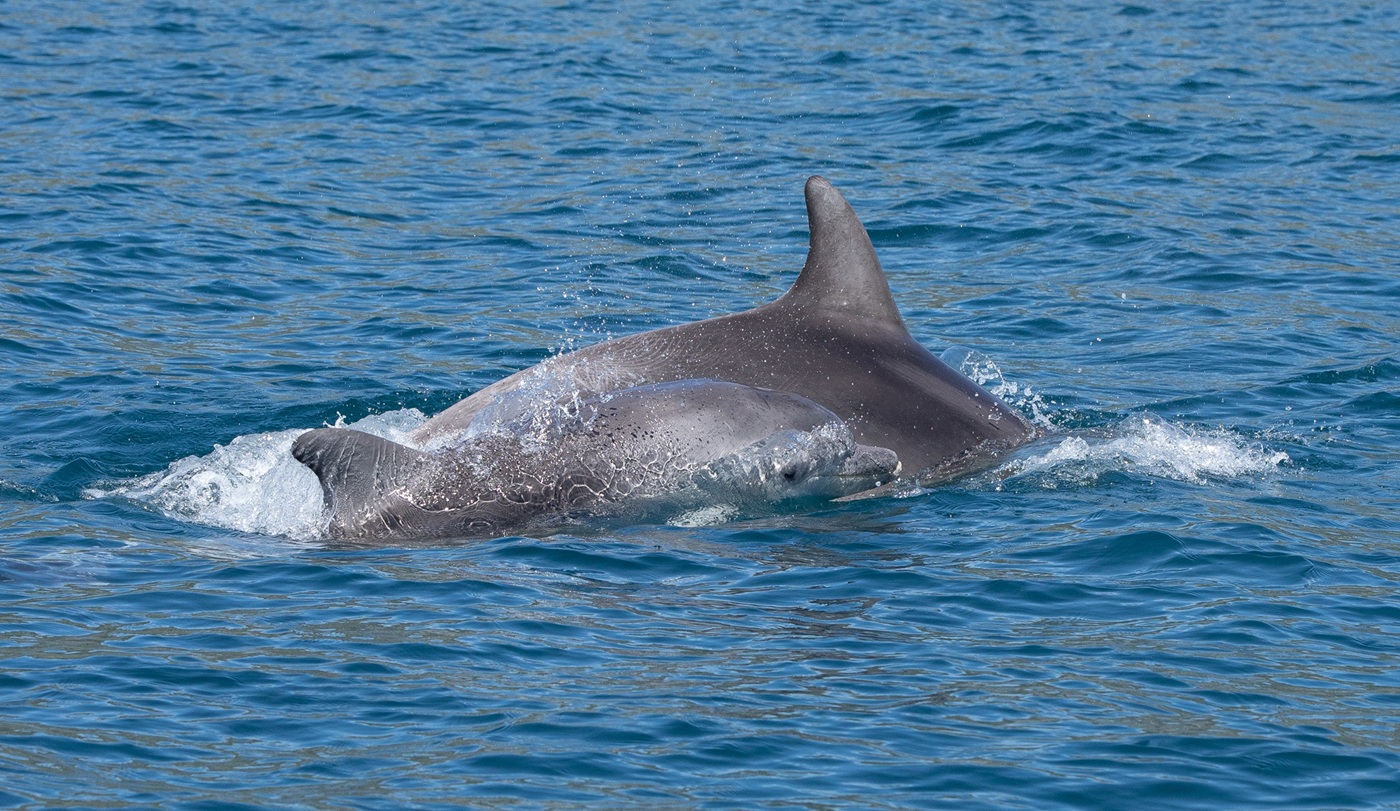
Oliver with his mother in 2021.
Despite the relatively favourable outlook regarding his injury, Oliver is not behaving like a typical bottlenose dolphin. To date, we have never observed him interacting with other bottlenose dolphins apart from his mother. At the same time, he has repeatedly been seen playing with buoys and approaching people who touch him and swim alongside him. Such behaviour is characteristic of so-called solitary dolphins. We use this term for individuals that separate themselves from others of their species and spend most of their time alone, without social contact with conspecifics. We still do not know why some individuals leave their groups and become solitary.
Intensive interaction with people inevitably creates risks both for the dolphin and for those in his vicinity. Disturbance, harassment and deliberate interference may provoke aggressive behaviour, while the dolphin’s sudden movements can injure people even when he is merely “playing” or spending time around swimmers. At least one case has been documented in which a bottlenose dolphin killed a swimmer (Brazil, 1994), and several others have resulted in serious injuries. In most instances, aggressive behaviour by dolphins has been a response to inappropriate human actions, including attempts to ride dolphins, hit them, pull their fins, or, in one case, even force ice cream into a dolphin’s blowhole. At the same time, dolphins can transmit a range of potentially serious diseases to humans (and vice versa), including tuberculosis, leptospirosis, brucellosis, bacterial infections caused by Mycoplasma and Erysipelothrix species, conjunctivitis, and viral and bacterial dermatitis.
The occurrence of solitary dolphins in the Adriatic is not a new phenomenon. Between 2014 and 2016, a solitary bottlenose dolphin named Bobi lived in the Karin Sea (https://www.blue-world.org/bobi-solitary-adriatic-dolphin/). A bottlenose dolphin named Joca lived in the Bay of Kotor, while another bottlenose dolphin, Filippo, was known from the waters near Manfredonia. Two solitary short-beaked common dolphins (Delphinus delphis) were recorded in Rijeka Bay and near the island of Rab (https://www.blue-world.org/solitary-short-beaked-common-dolphins-in-the-bay-of-rijeka-and-near-rab/). We have also documented solitary striped dolphins (Stenella coeruleoalba) in the bay of Mali Lošinj and in the Vinodol Channel. For most of these dolphins, close interaction with people ultimately proved fatal. As in previous cases, we believe that Oliver’s future will largely depend on how people choose to behave towards him.
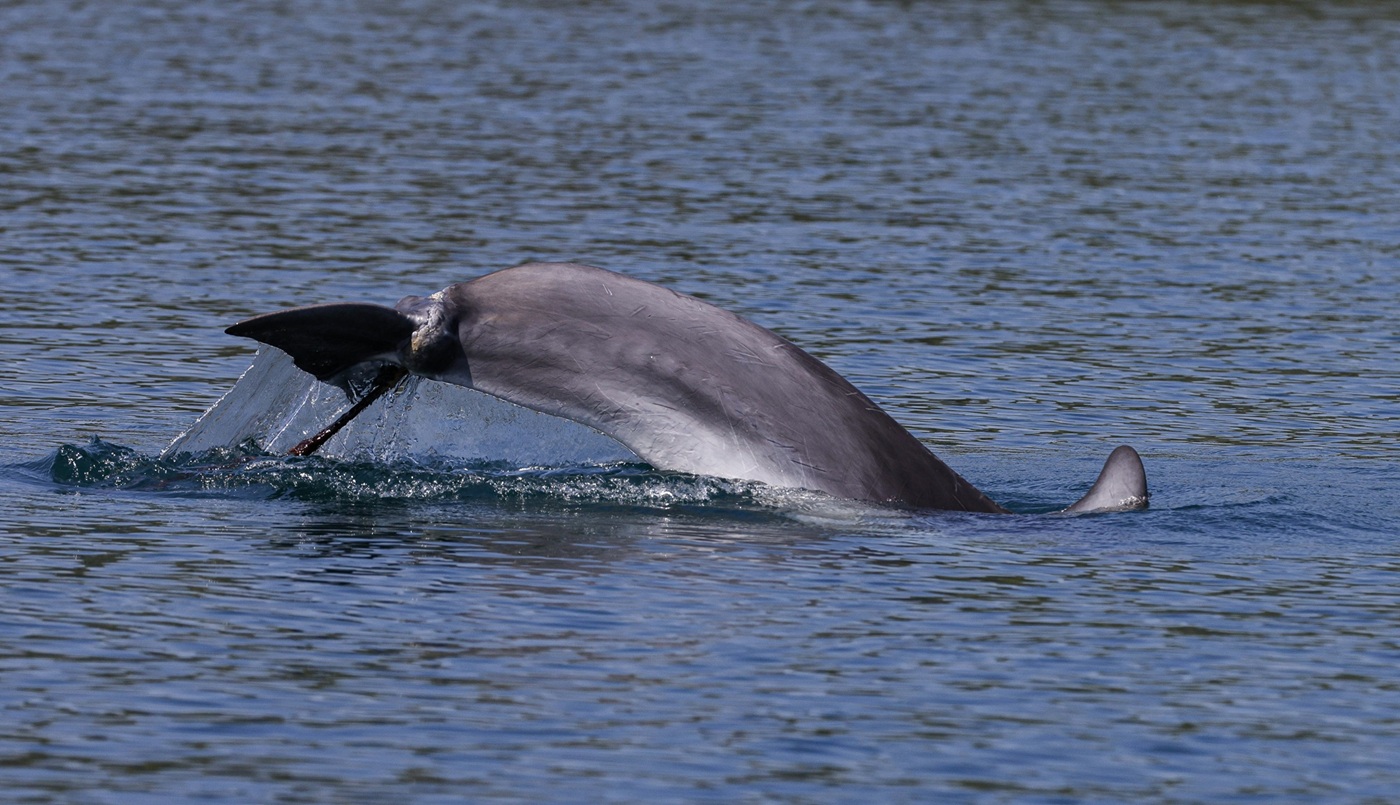
Oliver with rope entangled around his tail.
We therefore urge the public to:
We continue to record the presence of other bottlenose dolphins in the area frequented by Oliver. By preventing interactions between people and Oliver, we may encourage him to seek the company of members of his own species. Oliver is only 8–9 years old, and he could have many decades of life ahead of him if he returns to a more typical bottlenose dolphin lifestyle.
Furthermore, bottlenose dolphins are a strictly protected species, and all interactions with them are prohibited by law.
More information about responsible behaviour around dolphins can be found on our website:
If you spot Oliver or any other dolphin, please contact us at info@blue-world.org, via our Facebook page at www.facebook.com/blueworldinstitute, or through the free Marine Ranger mobile application. Your photographs, videos and information on the time, location and behaviour observed will help us monitor Oliver and other dolphins and contribute to their protection and welfare.
Thank you.
We are proud that the Blue World Institute has received...
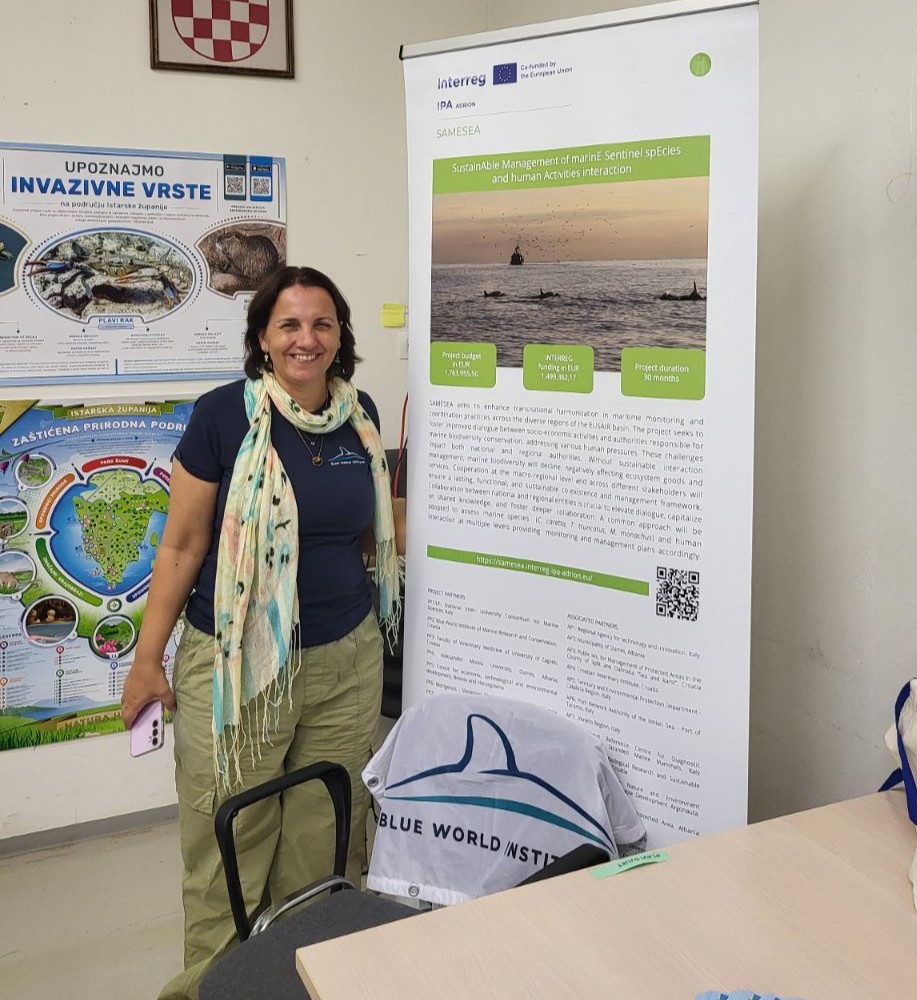
Last week, the members of the Blue World Institute participated...
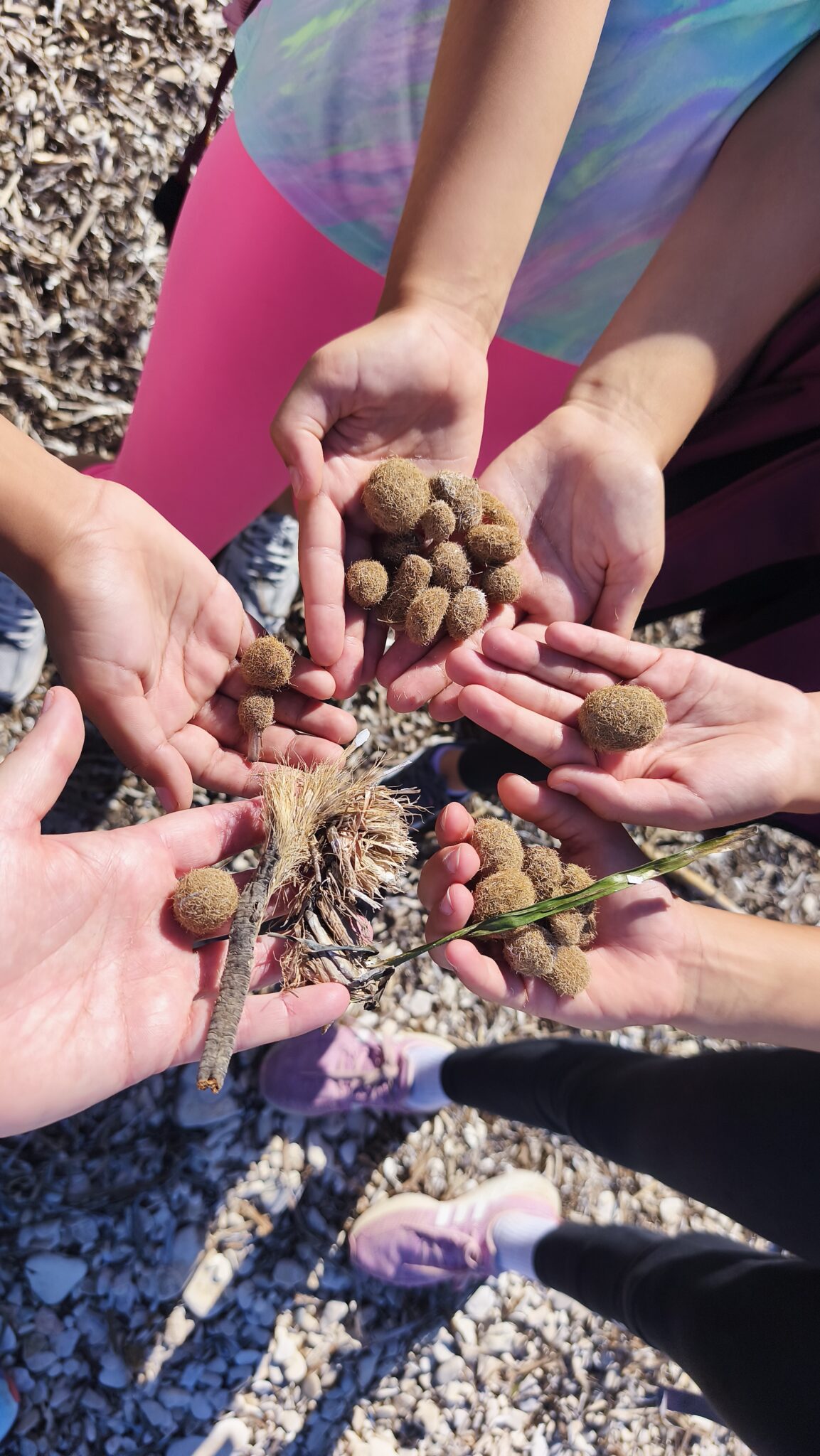
Yesterday, together with 4th-grade pupils from Mario Martinolić Primary School,...
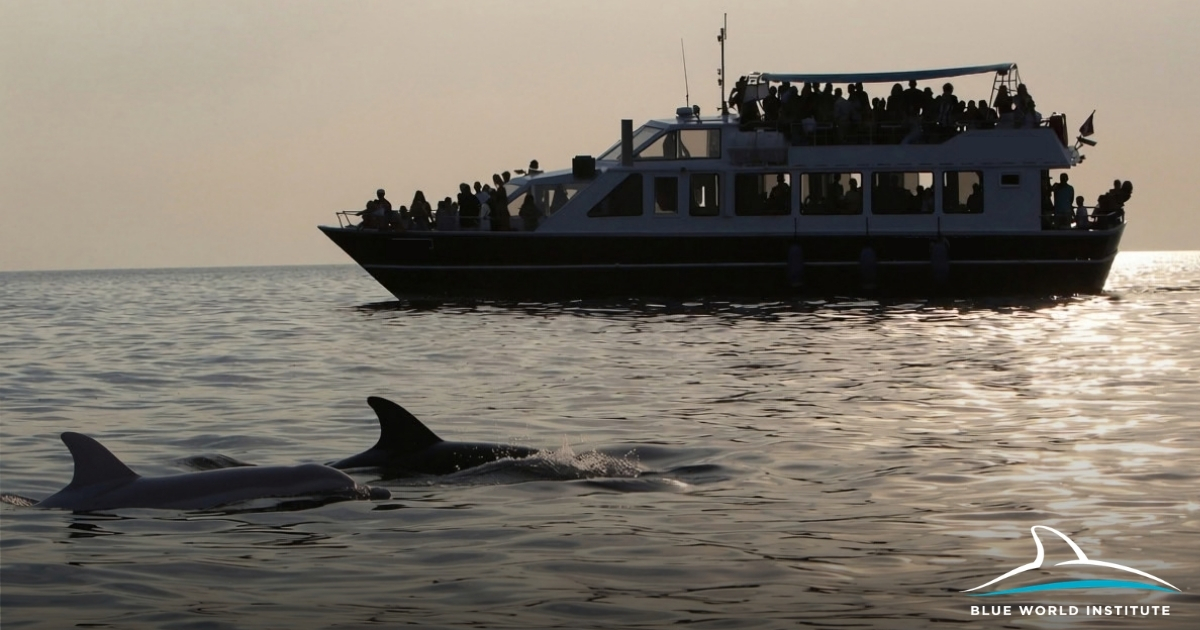
Dolphin observations have become an increasingly popular part of the...
