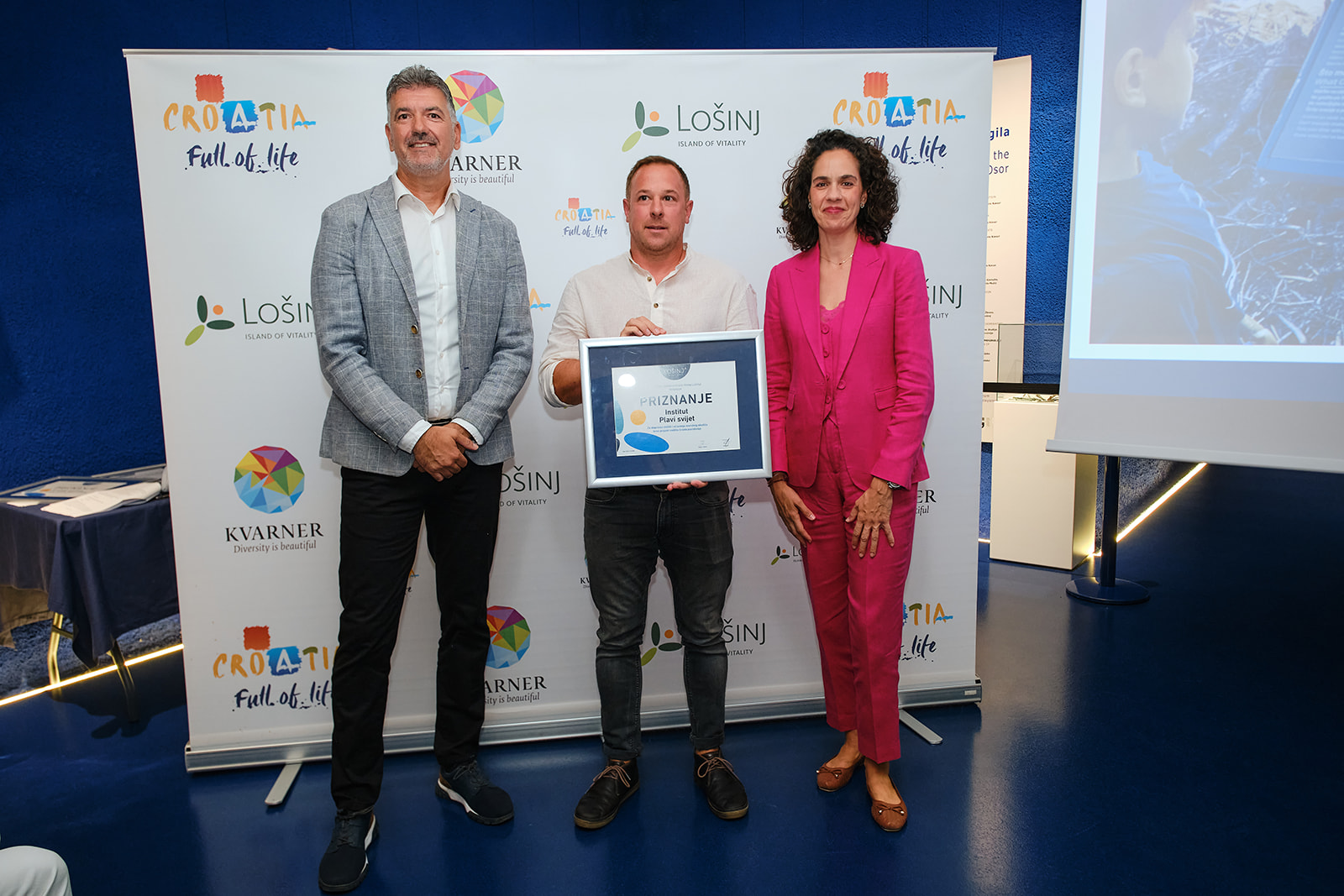
The Blue World Institute has received the “Business Excellence 2026” award in the NGO category
We are proud that the Blue World Institute has received...

31.07.2026
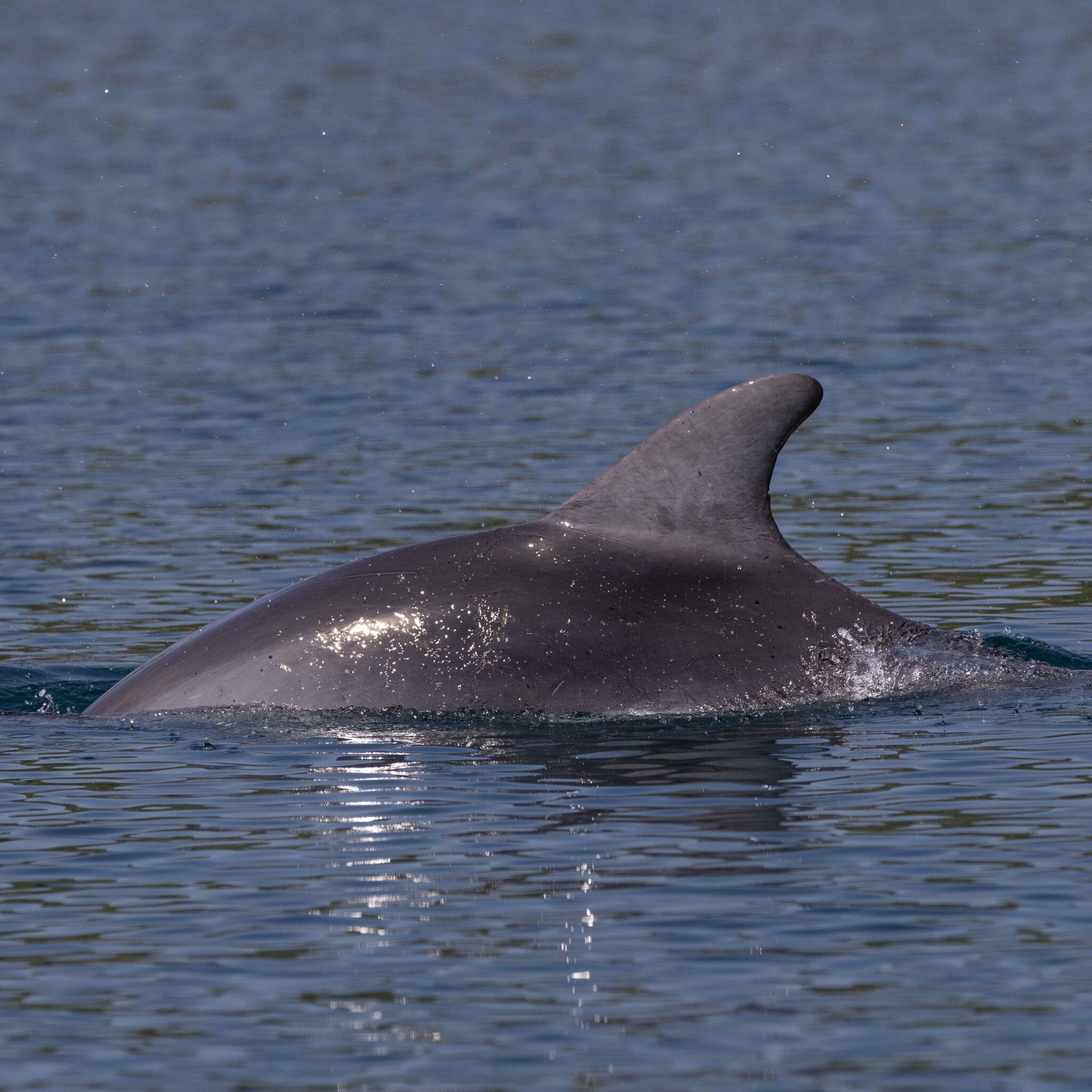
Keep your distance, for his safety and yours
Following a minor incident involving the bottlenose dolphin Oliver, we would like to repeat our warnings about interactions between Oliver and people in the Novigrad Sea. Videos circulating on social media show the first such incident, in which Oliver rolled over a swimmer and pushed him underwater. Fortunately, the swimmer was not injured — but the incident stayed minor only because he was lucky.
We have also received reports of Oliver pushing swimmers away from the shore, in which the people involved had the distinct feeling that he would not let them out of the water. This is a recognised pattern among solitary dolphins. The animal does not want to be left alone, so when the people who have been keeping it company begin to leave, it may try to hold on to them — blocking the way back to shore, or driving swimmers further out to sea. Someone who is tiring, or who has swum out further than they intended, has very little margin in that situation.
To prevent similar situations and more serious incidents, we once again call on people not to initiate interactions with Oliver, and to withdraw if he approaches, as further interactions may lead to new incidents with potentially far greater consequences. Adult bottlenose dolphins weigh more than 200 kilograms and can cause significant harm to people by ramming them with the beak, striking them with the fluke, or raking them with their teeth — the same means they use on one another — whether as part of rough play or in response to unwanted behaviour.
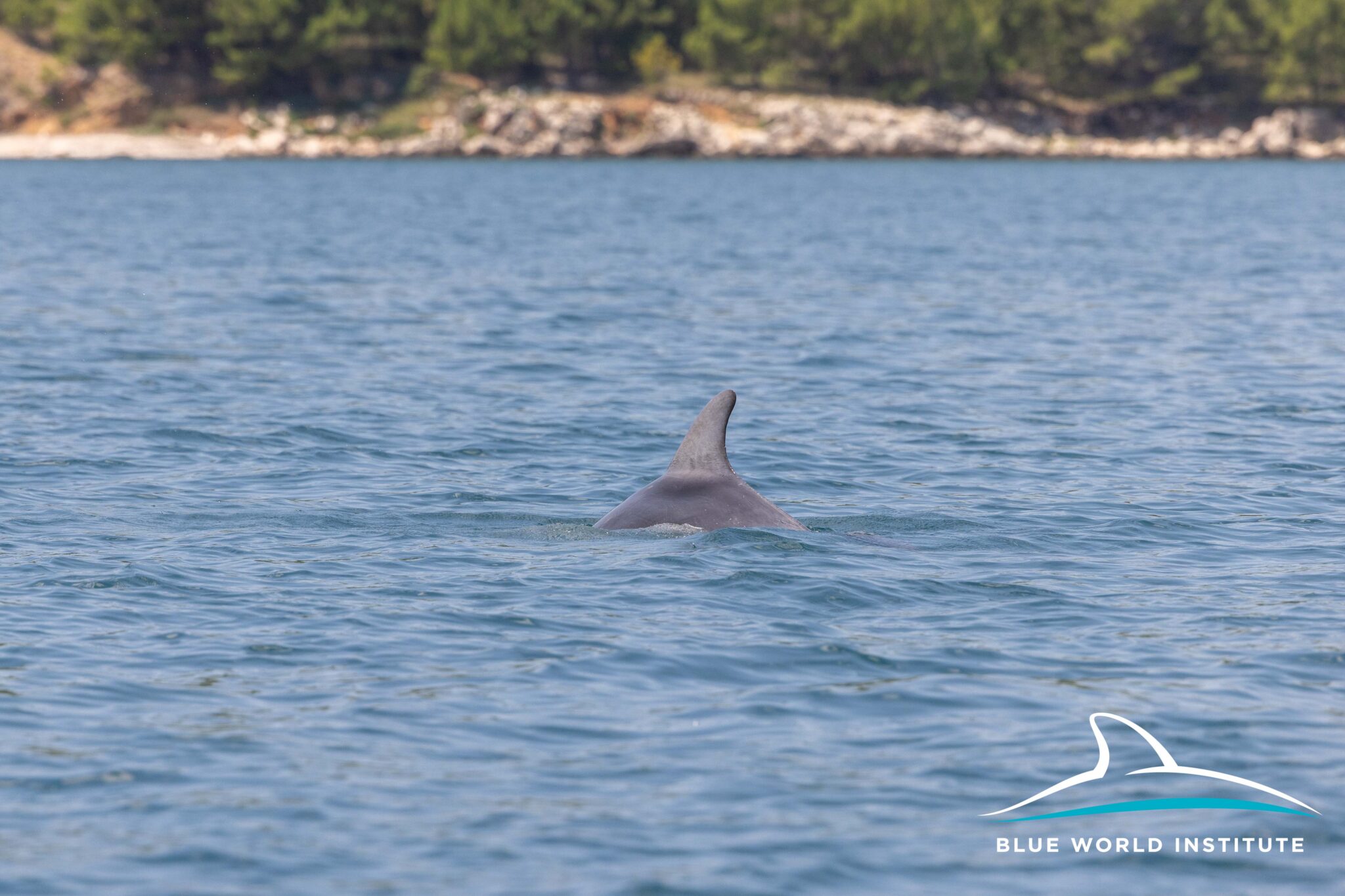
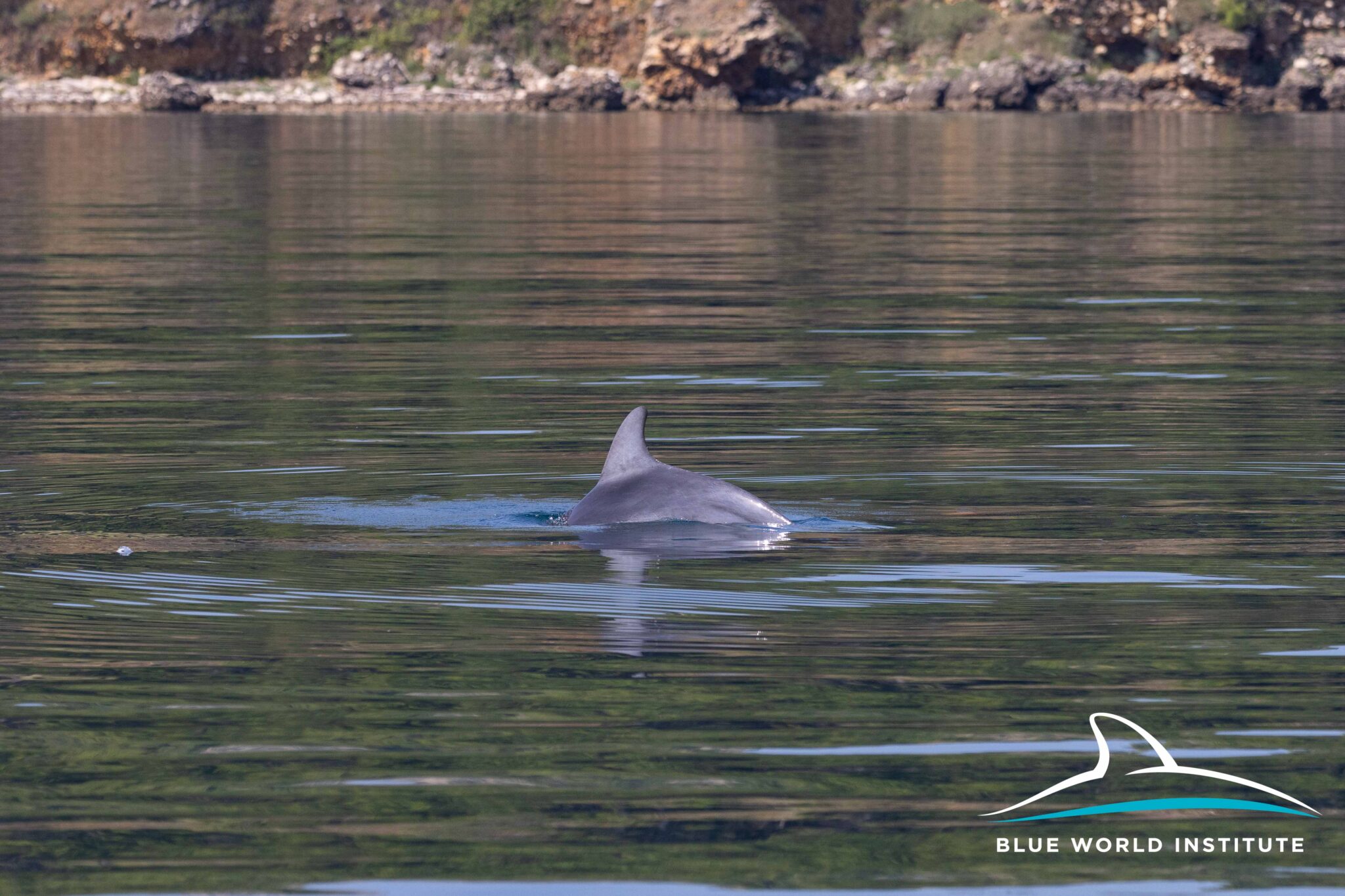
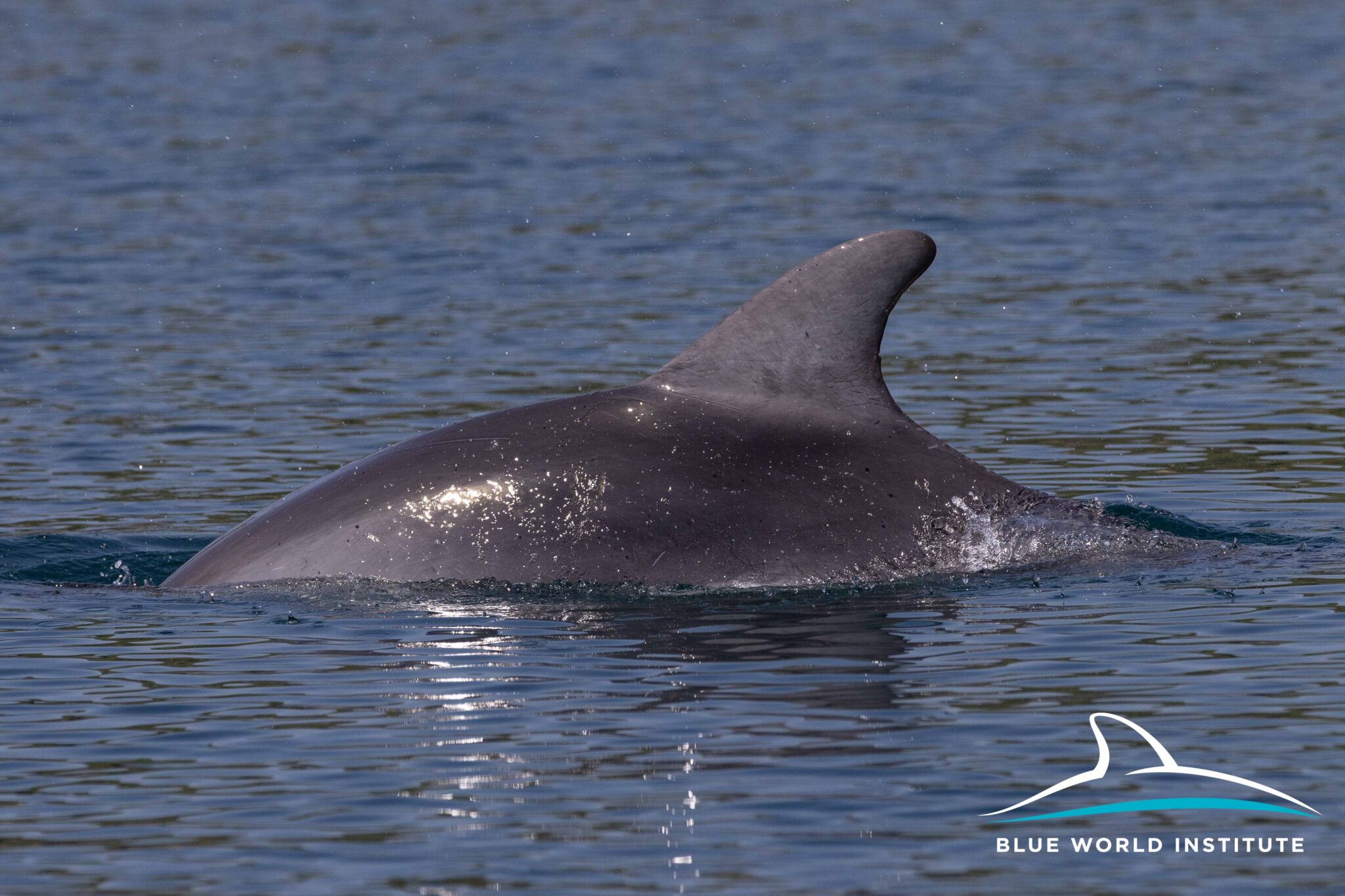
Oliver in the Novigrad Sea
All of this has happened elsewhere. In Brazil, a lone male bottlenose dolphin nicknamed Tião interacted with bathers at Caraguatatuba between August and December 1994. Their behaviour towards him ranged from simply touching him to grabbing his fins, hitting him and jumping on him, and some even tried to push ice-cream sticks into his blowhole. He reacted aggressively to this repeated harassment, and about 29 people were taken to hospital with minor injuries. On 8 December 1994 he struck a 30-year-old bather, who died several hours later of internal bleeding caused by a ruptured stomach (Santos, 1997, Marine Mammal Science 13(2): 355–356). Tião was 2.6 metres long — no larger than the dolphins living in the Adriatic. In August 2025 in Lyme Bay, Dorset, England, two kayakers had to rescue two women in separate incidents on the same day, after the solitary bottlenose dolphin known locally as Reggie jumped onto their backs and repeatedly forced their heads underwater. One of the rescuers described the swimmer as gasping for air and terrified. These are extreme cases, but the initial interactions between people and both of those dolphins were much like Oliver’s gentle behaviour today.
Beyond the risk of injury to individual people, negative interactions can also turn public feeling against the animal, and may prompt people to seek revenge on him.
To protect both Oliver and yourself, please follow these simple rules.
Do not approach him.
If you see Oliver from the shore or from a boat, do not get into the water to interact with him. Do not swim out to him, do not wait in the water for him to come to you, and do not follow him in order to film him.
Dolphins are social animals that live in complex societies. When those social ties are lost, solitary animals begin to search for contact elsewhere. Unfortunately, the human interest that always surrounds dolphins turns their attention towards people, and these interactions come to replace normal relationships with other dolphins. Continued human interest in socialising with Oliver habituates him further and reduces the chance that he will start looking for the company of his own species.
Habituation normally progresses in stages, from no interest in people or boats through to full interaction with both — and Oliver has already travelled the whole way. As recently as July 2024 he would not let our researchers near him, even as we were trying to free him from the rope cutting into his tail. Today he plays with balls, approaches swimmers, and lets people touch him. That also makes him lose his wariness, exposing him to further injuries. In Dorset, Reggie was injured most likely by a boat propeller — the common fate of dolphins that stop keeping their distance from vessels.
Do not swim, dive or snorkel with him.
Do not get into the water to be near him, and do not stay in the water once you know he is there. A mask, snorkel or diving equipment does not make close contact any safer, for you or for him. Accompanying him is the same interaction whatever equipment you are carrying, and diving gear tends to keep people in his company for far longer, which deepens his habituation all the faster. Underwater you also have less warning if his behaviour changes, and less room to withdraw.
Do not cling to his fins or try to “ride” him.
Dolphins establish and maintain a social order within their groups, and much of that order is negotiated physically: individuals assert or contest their rank by mounting one another, pushing on top of another animal, raking each other’s skin with their teeth, ramming, and chasing. A dolphin therefore reads this kind of body contact as a statement about position in the hierarchy, not as affection or play. Clinging to his fins, pulling him, or trying to climb onto his back may be interpreted as a display of dominance or a challenge to his rank, and can force him to respond aggressively. This is particularly true because we believe Oliver is a male, so such behaviour may provoke a strong reaction as he asserts his position. In addition, as he reaches sexual maturity, his behaviour may increasingly involve courtship and attempts to mate. In all of these cases the animal may press himself firmly against or on top of a swimmer, which can cause injury and leave a swimmer gasping for air.
Do not touch him.
People and dolphins can pass a number of serious diseases to one another, including tuberculosis, leptospirosis, brucellosis, bacterial infections of the genera Mycoplasma and Erysipelothrix, conjunctivitis, and viral and bacterial dermatitis. Never touch a dolphin, and least of all its blowhole, mouth or eyes. In Oliver’s case there is a further reason for caution. Until last year he carried a length of rope tangled around the base of his tail: it cut into the tissue, leaving scars that are still visible, and parts of both sides of his tail fluke were cut off. He is in good condition and swims and dives normally, but an animal already carrying such damage has little to spare if infection is added to it. A solitary animal that comes into contact with many different people over a season is exposed to infection far more often than a dolphin living among its own kind.
Move out of his way.
Oliver is not aggressive and is not looking for a confrontation. If he approaches you, there should be enough time to move away from him and swim towards the safety of shallow water. If you stay close and show interest in him, he will almost certainly read this as a wish to socialise.
Do not surround him.
Surrounding Oliver on all sides may be interpreted as an attempt to capture him and can leave him stressed and agitated. In such situations an animal may feel the need to defend itself, and may begin swimming aggressively, jumping, or slapping its tail.
Do not chase him with a boat, jet ski or paddleboard.
Do not steer towards him, do not pursue him, and do not turn back again and again for another pass. If you find yourself near him, hold a slow and steady course and never cut across his path. If he comes to your vessel of his own accord, put the engine in neutral and wait for him to move away. Propellers are among the greatest dangers a habituated dolphin faces: Reggie’s injury in Dorset was most likely caused by a boat, and an animal that has lost its wariness of vessels will keep approaching them.
Do not feed him.
Feeding encourages unnatural behaviour and can provoke aggression. Wild animals that become used to being fed by people stop hunting for themselves and come to depend entirely on food provided by humans. Larger animals in particular may then become aggressive in demanding food. People who do not realise the animal has been fed by others, and who have no food to give, may be injured when he aggressively seeks food or reacts with frustration at not receiving it.
FOR ALL OF THESE REASONS, WE URGE PEOPLE NOT TO BRING CHILDREN NEAR THE DOLPHIN
Children are not as sturdy as adults, and they need protection here more than anyone. A push or a blow that would leave an adult bruised and out of breath can injure a child seriously, and a smaller body has far less strength to move out of the way or to make its way back to shore. An adult bottlenose dolphin weighs more than 200 kilograms; a ten-year-old child weighs perhaps thirty.
To our dismay, we have even received reports of people trying to sit young children on Oliver’s back. Such behaviour is reckless and could have far-reaching consequences.
Let us learn from past experience and help prevent further incidents.
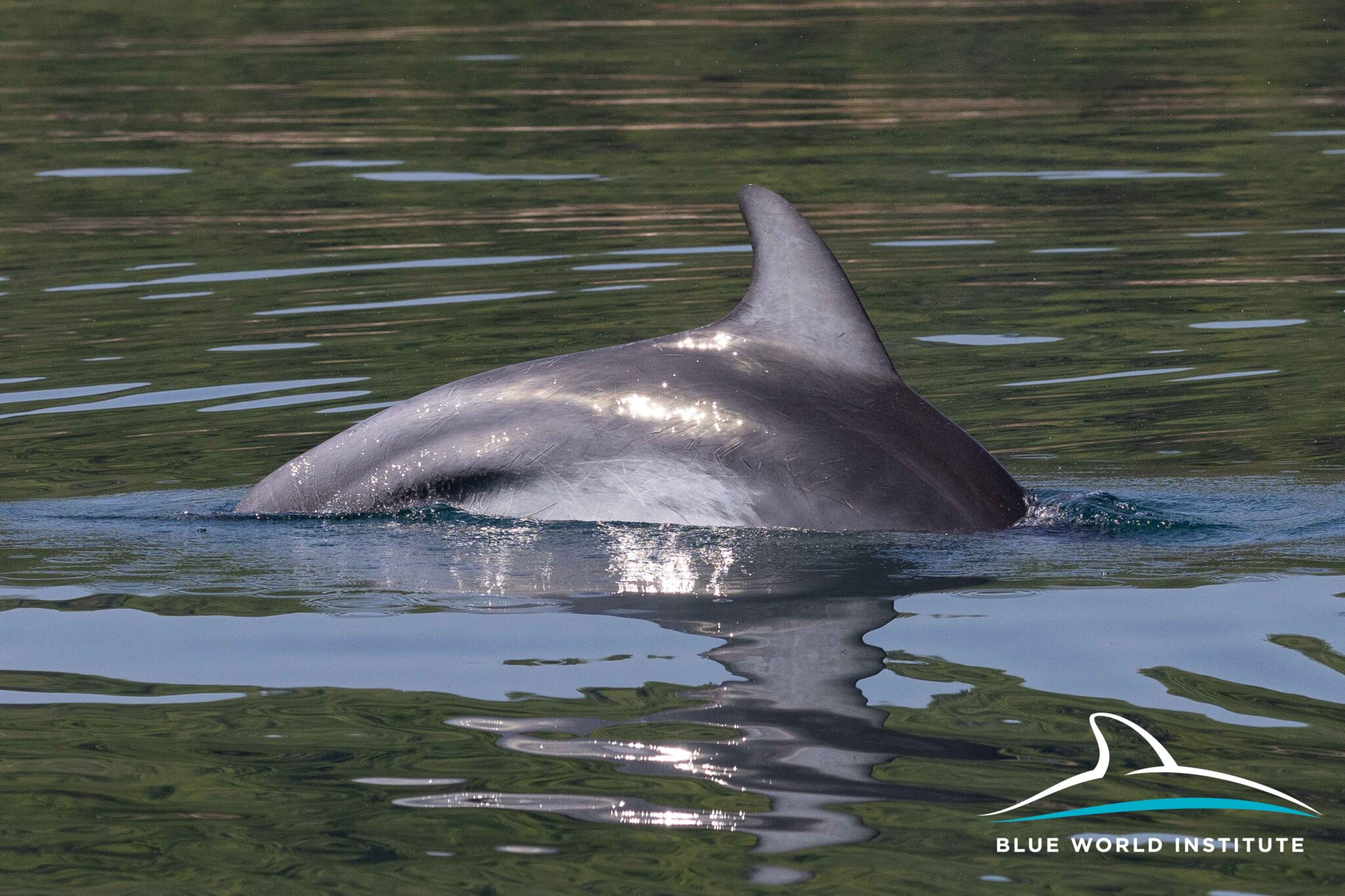
Oliver in the Novigrad Sea
Bottlenose dolphins are a strictly protected species in Croatia, and any interaction with them is prohibited. If you see anyone harassing Oliver, please contact the police or a nature protection inspector.
Please also send us your own sightings. Photographs, video, and information about the time, place, and behaviour of the animal all help us to monitor Oliver and the other dolphins of the Adriatic and to safeguard their welfare. You can reach us by email at info@blue-world.org, by telephone on 051 604 666, through our Facebook page at www.facebook.com/blueworldinstitute, or through the free Marine Ranger app for Android and iOS (www.marine-ranger.org). Thank you.
If you would like to know more about Oliver and other solitary dolphins, you can read our earlier texts:
• Oliver in the Novigrad Sea: https://www.blue-world.org/bottlenose-dolphin-oliver-in-the-novigrad-sea/
• Oliver, with a rope tangled around his tail: https://www.blue-world.org/bottlenose-dolphin-in-the-novigrad-sea-entangled-in-rope-around-its-tail/
• Bobi, the solitary dolphin of the Karin Sea: https://www.blue-world.org/bobi-solitary-adriatic-dolphin/
• Solitary common dolphins in the Bay of Rijeka and near Rab: https://www.blue-world.org/solitary-short-beaked-common-dolphins-in-the-bay-of-rijeka-and-near-rab/
SOURCES
Santos, M. C. de O. (1997). Lone sociable bottlenose dolphin in Brazil: human fatality and management. Marine Mammal Science, 13(2), 355–356.
Hughes, P. (2025, 20 August). Brothers rescue ‘terrified’ swimmers from dolphin. BBC News.
Hobson, M. (2025, 21 August). “Robust, powerful and unpredictable”: give Reggie the dolphin his space, warn experts. BBC Wildlife / Discover Wildlife — quoting Danny Groves, Whale and Dolphin Conservation, and the joint statement of the Marine Management Organisation, Dorset Police and Dorset Wildlife Trust.
ABOUT OLIVER
Oliver is a young male bottlenose dolphin (Tursiops truncatus), catalogued by the Blue World Institute as L_2191s21. We first saw him on 21 May 2021 in the Velebit Channel, still a calf swimming beside his mother. He is now about 8 years old, with decades of life ahead of him if he returns to the ordinary life of a bottlenose dolphin.
In autumn 2023 the public began reporting that he was trailing a piece of rope tangled around the base of his tail, most likely the remains of a fishing net. When our researchers reached him in the Novigrad Sea on 12 July 2024, with two vessels and specialised disentanglement equipment, the rope was a little over a metre long and overgrown with algae and marine invertebrates — evidence that he had been carrying it for a long time — and it had cut into the tissue around his tail. He would not let us approach, from a boat or in the water, and after several hours we abandoned the attempt for his safety and ours.
Oliver freed himself from the rope over the following year. The entanglement left its mark: parts of both sides of his tail fluke were cut off, and the scars at the base of his tail are still visible. He is nonetheless in good physical condition, swims and dives normally, and is plainly feeding well.
What is not normal is his social life. Apart from his mother, we have never seen Oliver in the company of another bottlenose dolphin. Instead he plays with buoys and approaches people who touch him and swim with him. This makes him a solitary dolphin — an animal that separates from others of its species and spends most of its time alone. Why some dolphins do this, we still do not know.
He is not the first in this region. Bobi lived in the Karin Sea from 2014 to 2016, Joca in the Bay of Kotor and Filippo off Manfredonia; two solitary common dolphins lived in the Bay of Rijeka and near Rab, and we have recorded solitary striped dolphins in the bay of Mali Lošinj and in the Vinodol Channel. For most of them, closeness to people proved fatal. Other bottlenose dolphins do use the waters Oliver moves through — and if people leave him alone, he may yet go looking for them.
We are proud that the Blue World Institute has received...
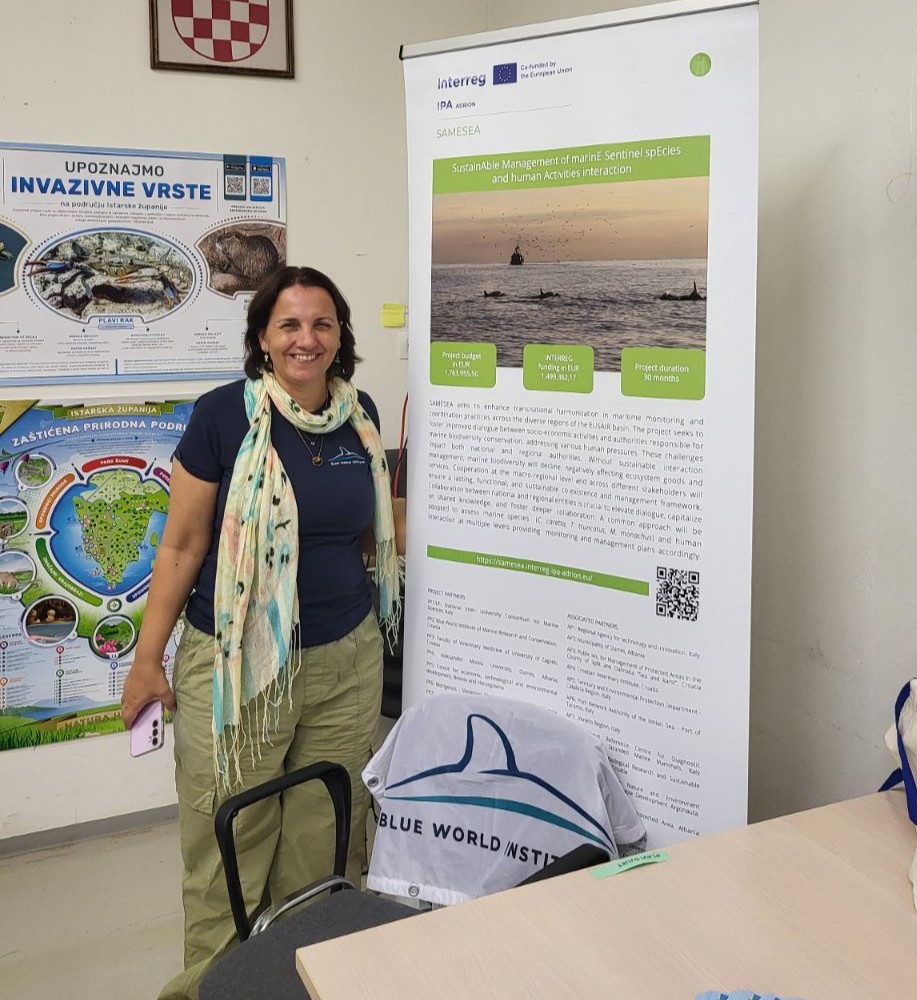
Last week, the members of the Blue World Institute participated...
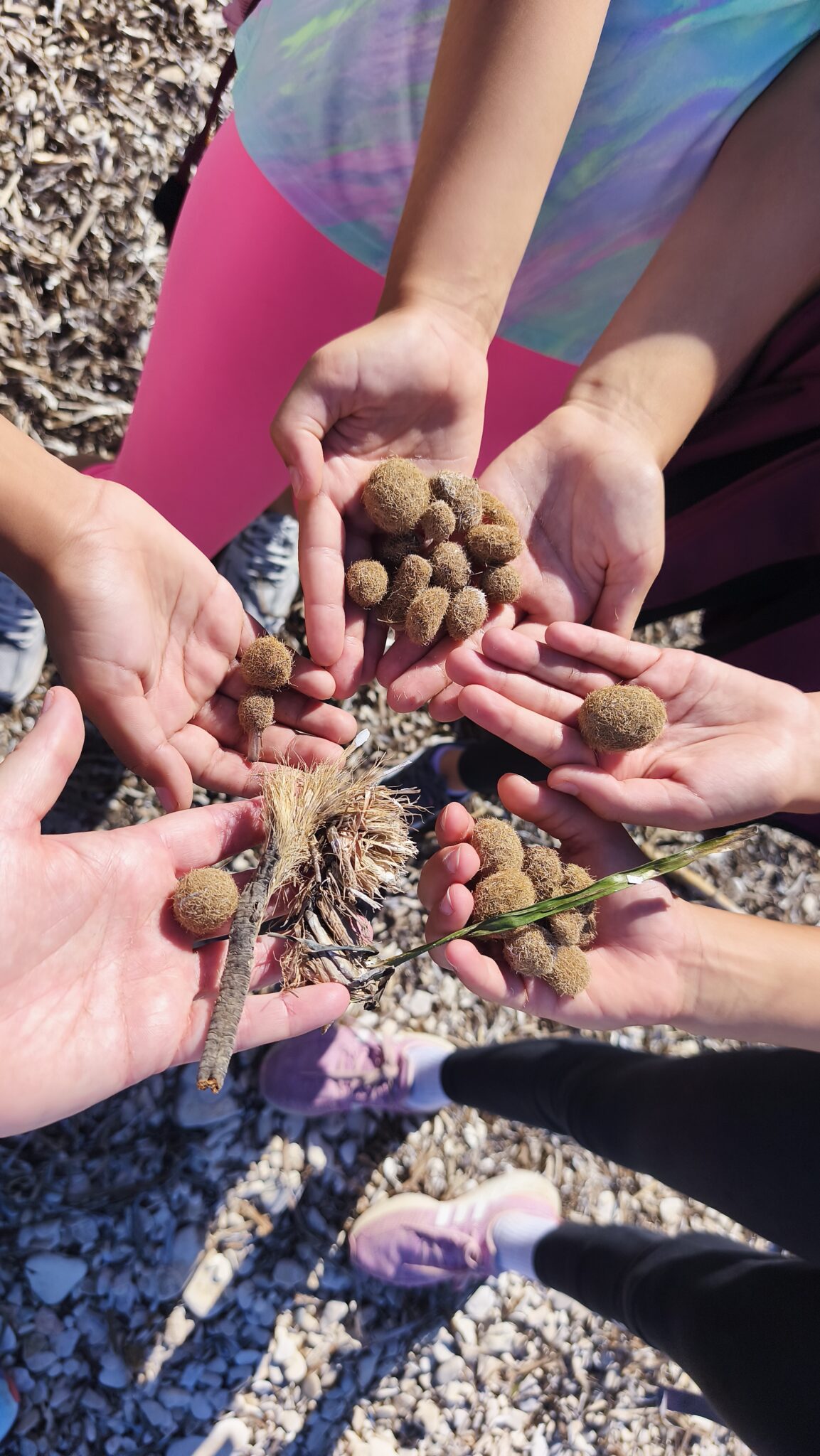
Yesterday, together with 4th-grade pupils from Mario Martinolić Primary School,...
Dolphin observations have become an increasingly popular part of the...
